Technical Post-Sales Leader Competencies for AI Developer Tooling: A Complete Guide Most AI developer tooling deployments don’t fail on demo day. They fail quietly, months later, when a retrieval index goes stale or a tool call breaks without anyone noticing. That gap — between a working demo and a customer who actually trusts the product long-term — is where strong Technical Post-Sales Leader Competencies matter most. They’re often the difference between a renewal and a quiet churn.
This guide covers what the role looks like in practice, the core Technical Post-Sales Leader Competencies for AI Developer Tooling worth building, the tools that come up often, and a practical way to grow this skill set on a team.

What Is a Technical Post-Sales Leader? Defining Technical Post-Sales Leader Competencies for AI Developer Tooling
Once a contract is signed, someone has to own everything that follows — onboarding, integration, support, and adoption. That’s the technical post-sales leader. The role looks similar to customer success on paper, but it requires a much deeper technical foundation: real comfort with APIs, retrieval pipelines, and how AI agents behave in production.
When an agent misbehaves and a customer’s trust starts to slip, a generic apology doesn’t help much. What actually holds the relationship together is a leader who can explain specifically why it happened. That’s Technical Post-Sales Leader Competencies in action.
How the Role Actually Works: Technical Post-Sales Leader Competencies in Practice
The job comes down to three recurring responsibilities. Integration diagnosis means identifying whether a failure sits in the API layer, the retrieval pipeline, or the customer’s own workflow configuration. Behavior translation means connecting a shift in model accuracy to an outcome the customer actually cares about, like fewer support tickets or faster onboarding. Expansion judgment means recommending a new use case only after the current one has proven measurable value.
A large share of what customers report as “bugs” turn out to be an agent looping on a failed tool call rather than an actual outage.
When a customer says “the AI gave a wrong answer,” the cause is almost always one of three things: a stale or misconfigured retrieval index, a tool call that failed silently, or a context window that got truncated mid-conversation. Identifying which one it is, quickly, is one of the most valuable skills in this job — and one of the clearest signs of strong Technical Post-Sales Leader Competencies.
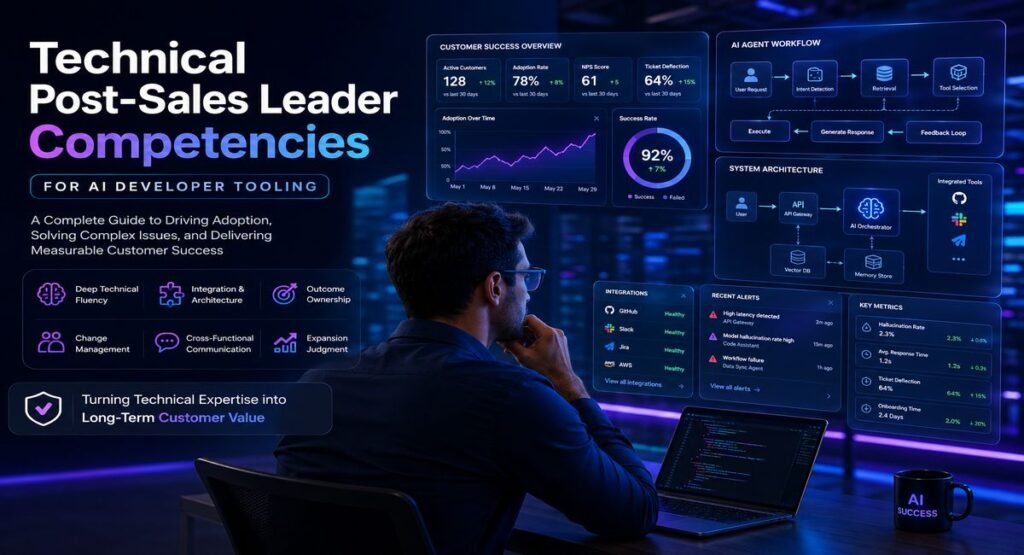
The 6 Core Technical Post-Sales Leader Competencies for AI Developer Tooling
These six areas consistently separate effective technical post-sales leaders from generalist account managers, and together they define the core Technical Post-Sales Leader Competencies for AI Developer Tooling.
1. AI and Machine Learning Fluency
Understanding model behavior, evaluation metrics, and why models hallucinate under ambiguous prompts. Every other competency builds on this one.
2. Integration Architecture Knowledge
Comfort with APIs, identity platforms, and how a tool-use loop connects into a customer’s existing DevOps workflow. Without this, diagnosing a real failure becomes guesswork.
3. Outcome Ownership
Defining baseline metrics before rollout, so success can be proven at renewal time rather than assumed.
4. Change Management
Helping teams adopt AI-augmented workflows without triggering distrust or quiet workarounds. A technically flawless rollout still fails if end users avoid it.
5. Cross-Functional Communication
Translating engineering language into board-level language, and back again, often in the same conversation.
6. Expansion Judgment
Knowing when a proven use case justifies scaling to a second team, versus pushing expansion too early.
Together, these six areas form the practical foundation behind every strong Technical Post-Sales Leader Competencies framework.
Technical Post-Sales Leader Competencies vs. Traditional Customer Success Skills
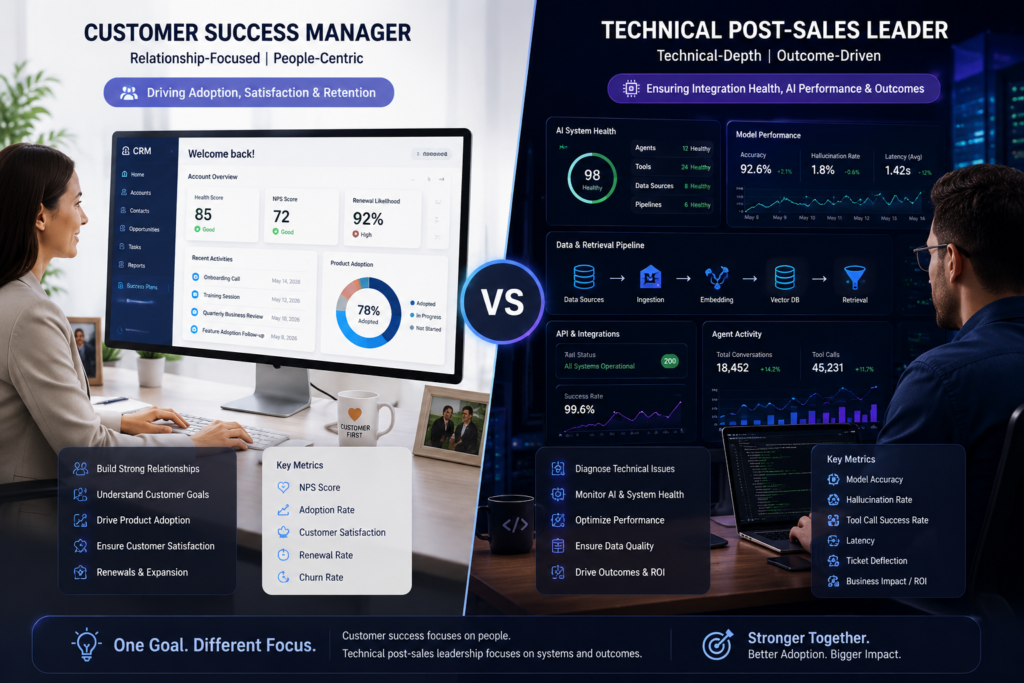
The table below shows how the role diverges from a conventional customer success position.
| Dimension | Traditional Customer Success Manager | Technical Post-Sales Leader (AI Developer Tooling) |
|---|---|---|
| Primary focus | Relationship health, satisfaction scores, renewal likelihood | Integration health, model behavior, measurable outcomes |
| Technical depth required | Product features and workflows | APIs, retrieval pipelines, tool-use loops, evaluation metrics |
| Failure diagnosis | Escalates most issues directly | Diagnoses API vs. retrieval vs. workflow before escalating |
| Success metrics | NPS, churn rate, adoption rate | Ticket deflection, accuracy thresholds, hallucination rate |
| Customer conversations | Feature requests, usage check-ins | Root-cause walkthroughs of agent behavior |
| Tools used daily | CRM, support ticketing | CRM, eval dashboards, vector databases, orchestration frameworks |
| Expansion approach | Cross-sell based on tenure | Expansion only after baseline metrics are proven |
| Credibility driver | Responsiveness and warmth | Ability to explain why an agent looped or failed a tool call |
This is why AI developer tooling companies increasingly hire leaders with genuine Technical Post-Sales Leader Competencies rather than promoting purely relationship-driven managers into the role.
Tools and Frameworks That Support Technical Post-Sales Leader Competencies for AI Developer Tooling
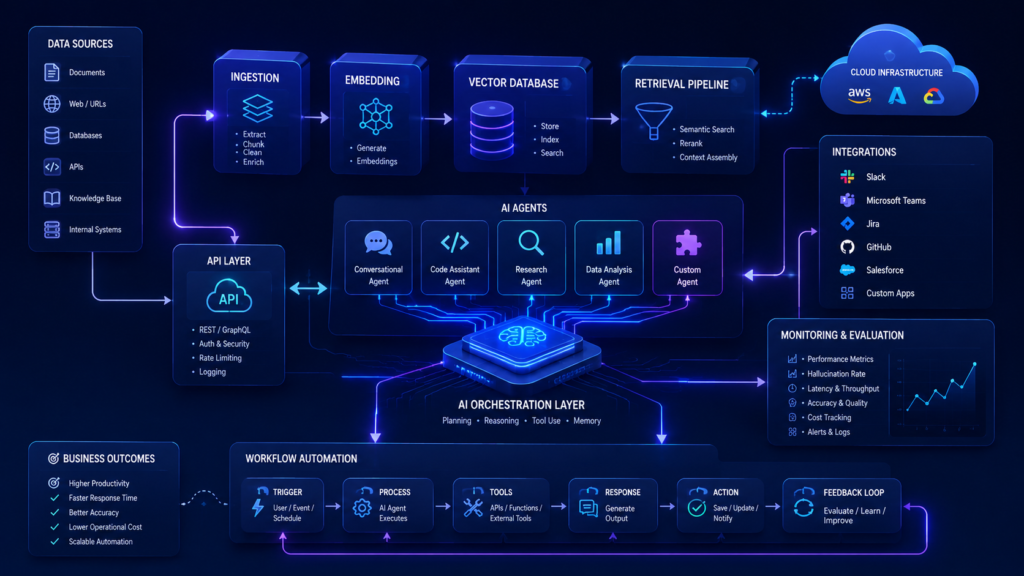
Post-sales leaders don’t need to write production code, but fluency with the frameworks their customers build on shortens every technical conversation. LangChain and similar orchestration frameworks chain together tool calls, memory, and planning steps, which helps pinpoint where in the chain a failure occurred. Function calling explains why a tool call didn’t fire as expected. Vector databases such as Pinecone-style systems store embeddings for retrieval and often explain stale-index issues behind a “wrong answer” ticket. Evaluation dashboards track hallucination rate, latency, and accuracy, and turn those numbers into renewal-ready evidence.
A useful habit: keep a one-page glossary of the product’s architecture — retrieval layer, tool-use loop, memory store — written in plain language. It’s one of the fastest ways to bring a new hire’s Technical Post-Sales Leader Competencies up to speed.
Step-by-Step: Building Technical Post-Sales Leader Competencies Into a Team
Start by mapping the architecture, so every hire works from the same understanding of the tool-use loop, retrieval layer, and API surface. Define two or three measurable success metrics per account before go-live. Build an escalation runbook that specifies exactly which issues route to engineering versus post-sales. Run quarterly technical reviews that look at accuracy, latency, and adoption data, not just satisfaction scores. And train for change management as seriously as for the tooling itself, since resistance to new workflows is often the real obstacle.
A simplified version of the escalation logic: a tool-call failure that’s already been retried more than twice routes to engineering, and so does any high-severity hallucination flag, rather than sitting in the post-sales queue.
Frameworks and APIs referenced above evolve quickly, so it’s worth verifying against current documentation before implementing anything in production.
Integrating AI Into the Broader Post-Sales Strategy Using Technical Post-Sales Leader Competencies
Beyond diagnosing failures, technical post-sales leaders shape how AI tooling gets adopted across an organization — automating repetitive support tasks so bandwidth goes toward strategic conversations, using AI-driven insights to catch adoption gaps before they become churn risks, feeding usage patterns back to the product roadmap, and championing enablement so teams don’t quietly abandon AI-driven workflows.
This is where Technical Post-Sales Leader Competencies show up most consistently — not in a single dramatic escalation, but in the steady, data-backed cadence of everyday customer conversations.
Key Metrics That Reflect Strong Technical Post-Sales Leader Competencies for AI Developer Tooling
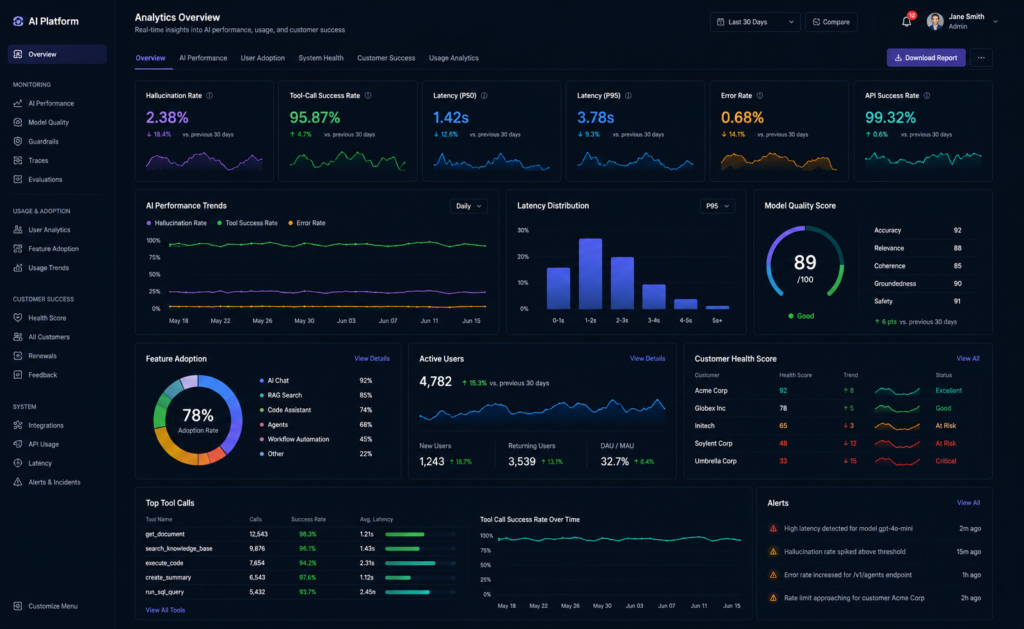
Moving comfortably between technical metrics and business language is one of the clearest markers of strong Technical Post-Sales Leader Competencies. On the model performance side, that means hallucination rate and accuracy threshold, which show whether the model still meets the quality bar agreed on at rollout. On reliability, it’s tool-call failure rate and latency, which flag integration issues before they turn into churn risks. On adoption, it’s active users and feature adoption rate, which reveal whether a workflow is genuinely being used rather than just installed. On the business side, it’s ticket deflection, resolution time, onboarding time reduction, and compliance risk reduction — the numbers that connect back to what leadership actually cares about.
Tracking these consistently from a documented baseline is what lets a leader walk into a renewal conversation with evidence instead of anecdotes. That single habit, more than any other, separates leaders with mature Technical Post-Sales Leader Competencies from those constantly playing defense.
Career Path and Growth for Leaders Building Technical Post-Sales Leader Competencies
The technical post-sales leader role is increasingly recognized as its own career track rather than a stepping stone out of customer success. Progression typically runs from Technical Post-Sales Associate, focused on onboarding and first-line troubleshooting, to Technical Post-Sales Leader or Senior Technical Account Manager, owning a portfolio and leading escalation decisions, to Head of Technical Post-Sales, building runbooks and training programs, and eventually VP of Customer Success and Technical Operations, setting company-wide standards.
Professionals who build strong Technical Post-Sales Leader Competencies early tend to have flexible career options, moving laterally into solutions engineering, technical program management, or product management.
Building Cross-Functional Collaboration as a Technical Post-Sales Leader Competency
Cross-functional collaboration is a core part of Technical Post-Sales Leader Competencies. Leaders regularly liaise between sales, engineering, and support, and that constant interaction shapes how well customer needs get translated into technical solutions. Building this muscle involves recurring cross-departmental syncs, structured feedback channels so customer signal reaches product consistently, collaboration tools that support real-time shared context, and active listening for the underlying concern behind what a customer says, not just the words themselves.
Soft Skills That Reinforce Technical Post-Sales Leader Competencies
Technical depth alone doesn’t make a great post-sales leader. The most effective ones pair architecture knowledge with active listening to catch the real problem behind a vague complaint, adaptability to pivot quickly when feedback shifts, conflict resolution to defuse frustration before it escalates, and clarity so complex technical concepts land with non-technical stakeholders. None of these replace technical depth, but together they turn raw Technical Post-Sales Leader Competencies into day-to-day credibility with customers.
Common Mistakes That Undermine Technical Post-Sales Leader Competencies for AI Developer Tooling
A few patterns show up repeatedly: treating post-sales as pure relationship management, which makes it hard to tell whether an issue is model behavior, integration, or user error; skipping baseline metrics before rollout, leaving no way to prove an outcome at renewal; over-promising expansion before the first use case has hit its success metric, which erodes trust quickly; ignoring change management, since a technically flawless deployment still fails if end users work around it; and under-investing in continuous learning, since frameworks evolve fast and skills go stale. Most of these mistakes trace back to weak Technical Post-Sales Leader Competencies at the individual or team level.
What Developers Are Saying About Technical Post-Sales Leader Competencies
Conversations in developer communities consistently surface the same pattern: post-sales contacts who can’t explain why an agent looped or hallucinated lose credibility fast, while those who can walk through the retrieval or tool-call layer earn trust immediately, often becoming the deciding factor in a renewal conversation.
Future-Proofing Your Career: Growing Technical Post-Sales Leader Competencies
A few habits help future-proof this career path: setting aside dedicated time each week for self-education on new frameworks and model releases, engaging with developer communities to stay ahead of emerging failure patterns, pursuing relevant certifications in machine learning fundamentals or cloud infrastructure, and building a professional network among engineering leads and other post-sales practitioners in the space.
FAQs — Technical Post-Sales Leader Competencies for AI Developer Tooling
What is a technical post-sales leader in AI developer tooling? A technical post-sales leader manages implementation, integration, and long-term adoption of an AI product after the sale, combining customer success skills with fluency in APIs, cloud infrastructure, and agent architecture — the core of Technical Post-Sales Leader Competencies.
What skills do you need for post-sales leadership in developer tooling AI? Core Technical Post-Sales Leader Competencies include AI/ML fluency, integration architecture knowledge, outcome ownership, change management, and cross-functional communication between engineering and business stakeholders.
How is technical post-sales different from customer success? Customer success focuses broadly on satisfaction and retention, while Technical Post-Sales Leader Competencies add the architecture fluency needed to diagnose integration and model-behavior issues directly.
Do post-sales leaders need to know how to code? Not necessarily, but understanding tool-use loops, retrieval pipelines, and API integration improves credibility and diagnostic speed with technical customers.
What causes AI developer tooling projects to fail after purchase? Vague success metrics, poor change management, unclear escalation paths, and post-sales teams that lack the Technical Post-Sales Leader Competencies to diagnose real issues.
How do post-sales teams measure success with AI developer tooling products? By defining baseline metrics before rollout, such as ticket deflection or onboarding time, and tracking them consistently against post-deployment data.
Conclusion: Why Technical Post-Sales Leader Competencies for AI Developer Tooling Matter
Technical Post-Sales Leader Competencies for AI Developer Tooling go beyond soft skills. They require genuine fluency in integration architecture, tool-use loops, and outcome measurement. Leaders who can pinpoint whether a failure lives in the retrieval layer, the API, or the customer’s own workflow build trust faster and drive renewals more reliably than those relying on relationship management alone. Organizations that invest in these six competencies put themselves in a far stronger position to retain and expand their AI developer tooling business.
