Short answer
Sexually explicit AI-generated or digitally manipulated images of a real person, made or shared without consent, are a form of image-based sexual abuse. Claims about alleged KATSEYE deepfake porn are unverified here, and this article does not link to, describe, or help anyone find any such material.
Whether a specific act is a crime depends on the country, the facts, and the person’s age. Many places now have laws that may apply to creating, sharing, or threatening to share these images. If you come across alleged abusive material, do not open, save, or share it. Report it through the platform and, where needed, to the authorities. Searching for KATSEYE deepfake porn fuels the abuse, so this guide explains safer actions instead.
Safety and legal disclaimer
This is general legal information, not legal advice. Laws differ by country, state, province, victim age, intent, content, platform, and conduct, and they change. Confirm anything you rely on with the official sources listed at the end or with a qualified lawyer. Nothing about KATSEYE deepfake porn claims makes the material lawful or harmless.
If you or someone you know is in immediate danger, being blackmailed, or being threatened, contact local emergency services or law enforcement now. Anyone threatened with KATSEYE deepfake porn should contact law enforcement immediately.
What alleged deepfake abuse means
A deepfake is media created or altered with artificial intelligence so that it appears to show a real person doing or saying something they did not. When the content is sexual and made without the person’s consent, experts call it non-consensual intimate imagery (NCII) or image-based sexual abuse.
The word “porn” can mislead. For the person depicted, an AI-generated intimate image is not entertainment. It is a violation of privacy and dignity, and it can cause lasting emotional, social, and professional harm.
This article uses “alleged” and “purported” because claims about specific material are often unverified. No one should try to verify such material by viewing or circulating it.
Why public figures may be targeted
Public figures have many photos and videos online, which gives AI tools plenty of source material. Fame can also attract harassment. KATSEYE is a global pop group formed by HYBE and Geffen Records that debuted in 2024, and groups with large international followings can become targets of this kind of abuse. Reports of KATSEYE deepfake porn show how fame can make artists targets of harassment.
Nothing here suggests that any specific KATSEYE member appears in sexual material. Public-figure status may affect how some legal claims, such as defamation, are assessed. It is not consent to sexual depiction or distribution, and it does not remove a person’s dignity or privacy interests. Public status does not excuse KATSEYE deepfake porn or any other sexual manipulation.
There is no reliable public data in this article on how many people are affected, so none is claimed. Without reliable data, nobody should claim to know how widespread KATSEYE deepfake porn is.
What the law may cover
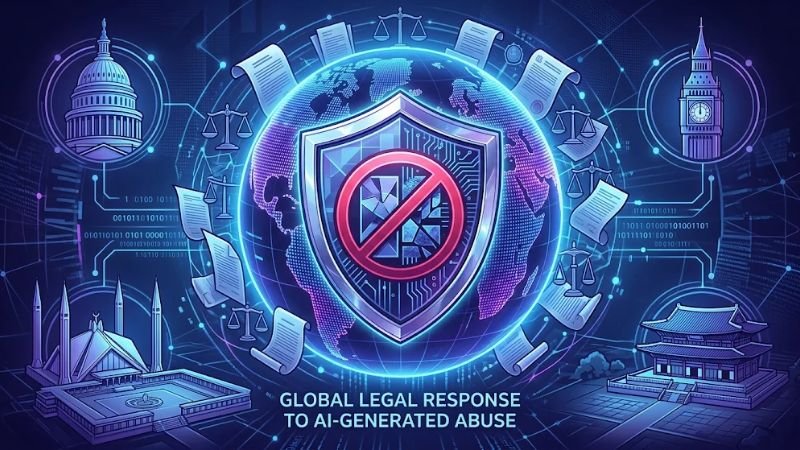
Legal systems usually treat different conduct separately. The same act can be handled differently depending on where it happens.
Creating or requesting creation. Some places, such as England and Wales, now have specific offences. Others rely on general laws or only cover sharing. Making KATSEYE deepfake porn can be an offence in some countries.
Possessing or viewing. Rare and highly jurisdiction-specific. South Korea has such provisions under defined conditions. Most other places do not criminalise viewing adult deepfakes in the same way. Material involving anyone under 18 is treated far more strictly almost everywhere. Viewing KATSEYE deepfake porn is treated differently from sharing it in most places.
Publishing, sharing, selling, or threatening to share. The most widely covered conduct. Sharing or selling KATSEYE deepfake porn is the conduct most widely covered by law.
Harassment, stalking, extortion, or blackmail. Often prosecuted under separate laws, even where the image itself is not clearly covered. Blackmail using KATSEYE deepfake porn can be prosecuted under extortion laws.
Platform duties. Laws that require platforms to provide reporting and removal tools are separate from criminal offences.
Civil claims. Depending on the place, a victim may have claims for invasion of privacy, defamation, misuse of likeness or publicity rights, copyright (where their own original photo was used), or emotional distress. Victims of KATSEYE deepfake porn may also have civil remedies in some places.
A label saying “this is fake” does not make content lawful. A label does not create consent, and legality turns on the statute and the facts. A fake label never makes KATSEYE deepfake porn acceptable or lawful.A label saying “this is fake” does not make content lawful. A label does not create consent, and legality turns on the statute and the facts.
United States
Status: enacted federal law plus varying state laws.
The federal TAKE IT DOWN Act was signed on May 19, 2025. It addresses the publication of non-consensual intimate visual depictions, including qualifying AI-generated depictions the Act calls “digital forgeries”. Its criminal provisions took effect when it was signed, and they also cover certain threats to publish. The exact elements, age distinctions, and penalties are set out in the statute, so check the text before relying on a summary.
The Act also creates a notice-and-removal process for “covered platforms”, meaning certain websites, apps, and online services. The Federal Trade Commission (FTC) enforces this part. According to the FTC, these duties became enforceable on May 19, 2026. When a covered platform receives a valid removal request, it must remove the reported content and make reasonable efforts to remove known identical copies within 48 hours. The 48-hour period applies to valid requests and covered platforms only, not to every website.
The FTC has also launched TakeItDown.ftc.gov, where people can complain about platforms that do not respond to valid requests.
State laws vary. Many states have their own laws on sexual deepfakes, and they may differ on creation, distribution, threats, harassment, privacy, publicity rights, and civil damages. The TAKE IT DOWN Act does not mean that merely viewing or possessing every deepfake is a federal crime. Material involving minors is treated separately and far more seriously under other laws.
The DMCA (a copyright takedown system) may help only where the victim owns the copyright in an original photo or video that was used. It is not a universal remedy for NCII.
What to verify: the current statute text, whether your state has its own deepfake or NCII law, and whether the platform is a “covered platform”.
United Kingdom
Status: several measures are in force in England and Wales. Scotland and Northern Ireland have their own laws, so check them separately.
Three separate things matter here.
- Sharing or threatening to share intimate images without consent. Section 66B of the Sexual Offences Act 2003, inserted by the Online Safety Act 2023, covers this, including images that are altered or computer-generated. This offence has been in force for some time.
- Creating or requesting the creation of a purported intimate image of an adult. Section 138 of the Data (Use and Access) Act 2025 inserted new offences into the Sexual Offences Act 2003. Official commencement regulations (SI 2026/31) brought section 138 into force on February 6, 2026. The offence turns on the absence of consent and of a reasonable belief in consent.
- Platform duties. The Online Safety Act 2023 places duties on regulated online services, overseen by Ofcom. These duties are separate from the criminal offences, and a service’s compliance does not decide whether an individual committed an offence.
Official guidance on penalties and territorial scope should be checked on legislation.gov.uk and gov.uk.
What to verify: the current text and penalties of the offences, which part of the UK applies to you, and Ofcom’s latest guidance.
South Korea
Status: enacted. Reported to have taken effect after promulgation in autumn 2024.
South Korea specifically addressed sexually explicit deepfakes by amending the Act on Special Cases Concerning the Punishment of Sexual Crimes. The National Assembly passed the amendment on September 26, 2024. Korean media report that it:
- raised the maximum prison term for producing or distributing sexually explicit deepfakes from five to seven years;
- created a penalty of up to three years in prison or a fine of up to 30 million won for knowingly possessing, purchasing, storing, or viewing such material; and
- added a clause so that people who unknowingly stored or viewed it are not punished.
A separate bill that would extend similar rules to AI-generated sexual depictions of fictional people was still under review in Parliament at the time of the reports checked. It is a proposal, not current law.
Do not generalise from South Korea to other countries. Most jurisdictions do not punish viewing in the same way.
What to verify: the exact offence wording, the intent requirement, the effective date, and current penalties on the official Korean legislation site (law.go.kr) or in an authoritative legal report.
Pakistan
Status: enacted law, with amendments since 2016.
Section 21 of the Prevention of Electronic Crimes Act (PECA) 2016 concerns offences against the modesty of a natural person and a minor. In its published text, it covers a person who intentionally and publicly exhibits, displays, or transmits information through an information system that superimposes a photograph of a person’s face over a sexually explicit image or video, or includes a person in sexually explicit conduct, or intimidates a person with such material. The conduct must be done to harm the person or their reputation, to take revenge, to create hatred, or to blackmail.
The published text sets a penalty of up to five years in prison, a fine of up to five million rupees, or both. For offences involving a minor, it sets up to seven years, a fine of up to five million rupees, or both. Confirm the current figures, since the Act has been amended and secondary sources sometimes quote them differently.
This does not mean every AI-generated sexual image automatically falls under Section 21. Liability can depend on intent, transmission or public display, harm, blackmail, revenge, whether the person is identifiable, and other statutory facts. Related provisions, such as Section 20 (dignity of a person) and Section 24 (cyberstalking), may also be relevant. Section 22 addresses child sexual abuse material.
Complaints can be made to Pakistan’s National Cyber Crime Investigation Agency (NCCIA), the agency that now handles many cybercrime complaints. This article does not give a helpline number, URL, or response time. Complaint procedures change, so check the agency’s official website before you use any channel.
What to verify: the current consolidated PECA text, the current complaint channel, and the current penalties.
Comparison table
This table is a simplified overview for orientation. It is not legal advice, and it is not universal. Details, thresholds, and penalties depend on the statute and the facts.
| United States | England and Wales | South Korea | Pakistan | |
|---|---|---|---|---|
| Main measure | TAKE IT DOWN Act (federal) plus state laws | Sexual Offences Act 2003 (ss. 66B and new offences via Data (Use and Access) Act 2025, s. 138); Online Safety Act 2023 | Act on Special Cases Concerning the Punishment of Sexual Crimes (2024 amendment) | PECA 2016, Section 21 (and related sections) |
| Creating | Not the focus of the federal Act; some state laws may cover it | Offence in force from Feb 6, 2026 for adult depictions, subject to consent | Covered (production) | Depends on the statutory facts; Section 21 focuses on display, transmission, and intent |
| Sharing or threatening | Covered by the federal Act (publication, certain threats); state laws vary | Covered (sharing and threatening to share) | Covered (distribution) | May be covered where Section 21 elements are met |
| Possessing or viewing | Not a general federal offence under the Act; state and child-protection laws differ | Not the same as creation or sharing offences | Covered under defined conditions (knowing possession or viewing) | Not specifically addressed in the text summarised here; verify |
| Platform duties | Notice-and-removal for covered platforms; 48 hours after a valid request | Online Safety Act duties, overseen by Ofcom | Separate state-support duties exist; verify scope | Complaints through the competent authorities; verify the process |
| Enforcement body | FTC (platforms); prosecutors (criminal) | Police and prosecutors; Ofcom (platforms) | Police and prosecutors | NCCIA and other competent authorities |
What to do if you find alleged abusive material
Follow these steps in order. They apply whether you are a fan, a friend, or the person affected.
- Do not open, download, save, repost, or forward the material. Sharing it privately still spreads it.
- Do not quote-post it, even to criticise it. Criticism still amplifies the content.
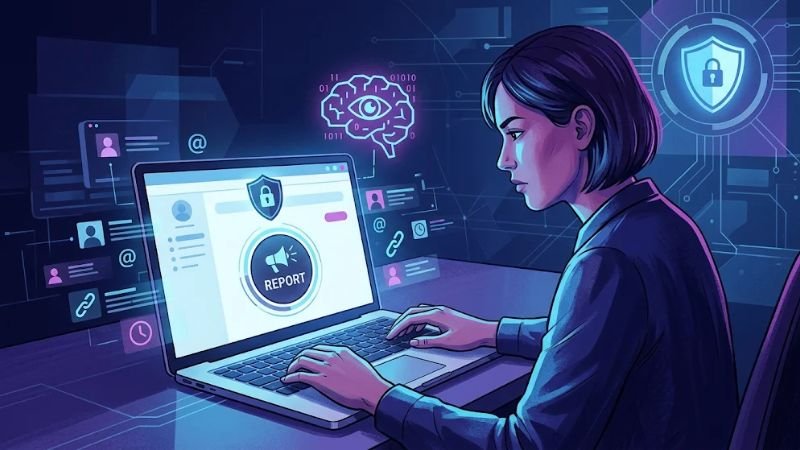
- Use the platform’s reporting tool. Choose the option for non-consensual intimate imagery, sexual exploitation, privacy, or synthetic or manipulated media.
- Record the details, not the file. Note the page URL, account name, platform, date, and any relevant non-explicit context. Reporting these details can be safer than saving explicit content.
- Do not contact or threaten the alleged creator. It can escalate the situation and may expose you to legal risk.
- If the person depicted is an adult, StopNCII.org can create a digital fingerprint (a hash) of an image on that person’s own device and share the hash with participating platforms. The original image is not uploaded to StopNCII.
- If the person was under 18 when the image or video was created, use NCMEC’s Take It Down service and report to child-protection or law-enforcement channels.
- Report blackmail, threats, stalking, or extortion to the relevant law-enforcement or cybercrime authority.
- Seek support from a qualified lawyer, a counsellor, a victim-support service, or a trusted person.
- Know the limits. Takedown tools are not guaranteed to remove content from every website. They do not replace a police report where threats or coercion are involved.
What victims should do
If you are the person depicted, the abuse is not your fault. You did not cause it and you do not owe anyone an explanation.
- Get safe first. If someone is threatening or blackmailing you, contact local emergency services or law enforcement.
- Use the removal tools above. For a platform covered by the US TAKE IT DOWN Act, a valid removal request starts the 48-hour clock. Keep a copy of your request and the platform’s reply.
- Keep a record. Write down URLs, usernames, dates, and times. Avoid saving explicit files unless an investigator asks you to.
- Consider legal advice. A lawyer can explain criminal complaints, civil claims, and takedown demands in your location. Victim-support organisations may offer free help.
- Look after yourself. Many people feel anger, fear, or shame, even though none of it is theirs to carry. Talking to a trusted person or a counsellor can help.
How fans can help without amplifying harm
Fans can do real good by acting calmly.
- Report, do not repost. Use the platform’s tools instead of sharing screenshots.
- Do not search for the material. Search demand tells bad actors the content has an audience, and this article does not encourage it.
- Do not accuse or speculate about any member or any account. Unverified claims can hurt real people.
- Follow official channels from the group and its label for statements and guidance.
- Share helpful information about reporting tools, not the abusive content itself.
- Support the artists’ official work.
How to identify likely manipulation without spreading it
Follow these steps in order. They apply whether you are a fan, a friend, or the person affected. If you encounter KATSEYE deepfake porn, do not engage with it beyond reporting.
Know the limits. Takedown tools are not guaranteed to remove content from every website. They do not replace a police report where threats or coercion are involved.
Do not open, download, save, repost, or forward the material. Sharing it privately still spreads it.
Do not quote-post it, even to criticise it. Criticism still amplifies the content.
Use the platform’s reporting tool. Choose the option for non-consensual intimate imagery, sexual exploitation, privacy, or synthetic or manipulated media. Reporting KATSEYE deepfake porn on the platform is safer than saving or forwarding it.
Record the details, not the file. Note the page URL, account name, platform, date, and any relevant non-explicit context. Reporting these details can be safer than saving explicit content.
Do not contact or threaten the alleged creator. It can escalate the situation and may expose you to legal risk.
If the person depicted is an adult, StopNCII.org can create a digital fingerprint (a hash) of an image on that person’s own device and share the hash with participating platforms. The original image is not uploaded to StopNCII.
If the person was under 18 when the image or video was created, use NCMEC’s Take It Down service and report to child-protection or law-enforcement channels.
Report blackmail, threats, stalking, or extortion to the relevant law-enforcement or cybercrime authority.
Seek support from a qualified lawyer, a counsellor, a victim-support service, or a trusted person.
Frequently asked questions
Is alleged KATSEYE deepfake porn real?
This article cannot verify any specific material, and it does not try to. Material described this way is purported to be synthetic or manipulated. Do not try to confirm it by viewing or sharing it. Check official statements from the group or its label instead.
Is deepfake porn illegal?
It may be, depending on where you are, what the conduct is, and the facts. Creating, sharing, or threatening to share a non-consensual sexual deepfake can trigger criminal or civil liability in many places. The result depends on the specific law. KATSEYE deepfake porn may be illegal depending on location and conduct.
Is it illegal to watch deepfake porn?
In most places, viewing adult deepfakes is not treated the same way as creating or sharing them. South Korea is a notable exception, with penalties for knowingly possessing or viewing such material under defined conditions. Viewing may still cause harm, and anything involving minors is treated very seriously almost everywhere. Watching KATSEYE deepfake porn may be lawful in some places but is still harmful.
Does a “this is fake” label make it legal?
No. A label does not create consent. Whether conduct is lawful depends on the statute and the facts.
How do I report deepfake abuse?
Use the platform’s non-consensual intimate imagery or synthetic media report option. Record the URL, account, platform, and date, and avoid saving the explicit file. Adults can use StopNCII.org, and anyone who was under 18 when the content was created can use NCMEC’s Take It Down. Report threats or extortion to law enforcement. To report KATSEYE deepfake porn, use the platform’s non-consensual imagery option.
How fast must platforms remove it?
Under the US TAKE IT DOWN Act, a covered platform must remove reported content and known identical copies within 48 hours of a valid removal request. This does not apply to every website or every country.
What does Pakistan’s PECA Section 21 cover?
It addresses certain conduct involving sexually explicit material, including superimposing a person’s face over such material, when statutory requirements such as intent to harm, revenge, or blackmail and public display or transmission are met. Not every AI-generated sexual image automatically falls under it. Check the current text and the NCCIA’s official channel.
What does the UK law now say about creating deepfakes?
In England and Wales, creating or requesting the creation of a purported intimate image of an adult without consent or reasonable belief in consent became an offence on February 6, 2026, under section 138 of the Data (Use and Access) Act 2025. Sharing and threatening to share are covered by separate offences.
Can the creators be identified?
Sometimes. Platform records, payment trails, and device evidence can help investigators, but success varies. There is no reliable public data in this article on how often creators are identified or prosecuted. Investigators may sometimes trace who made KATSEYE deepfake porn through platform records.
Conclusion
Alleged KATSEYE deepfake porn, like any non-consensual sexual deepfake of a real person, is a form of image-based sexual abuse. Laws in the United States, England and Wales, South Korea, and Pakistan show different ways governments are responding, and each has limits and conditions. Treat every KATSEYE deepfake porn claim as abuse to report, not content to share.
What you can do today: do not search for, open, save, or share alleged abusive material. Report it on the platform, and use StopNCII or Take It Down if you or someone you know is affected. If there are threats or blackmail, contact law enforcement. Share this guide so more people know how to respond without spreading harm. Together, we can stop KATSEYE deepfake porn from spreading.