If you have ever listened to a fantasy game trailer, a tarot YouTube channel, or an audiobook narrated by a “wise wizard,” chances are you were listening to old mystical voice text to speech technology at work. This niche corner of AI voice generation has exploded over the last two years, and creators, game developers, meditation app owners, and YouTubers are all racing to find the right tool to bring their ancient sages, oracles, and forest spirits to life.
In this guide, we break down everything you need to know about old mystical voice text to speech: what it is, how it works, the best platforms available right now, the pros and cons of using AI for this kind of narration, and how to pick the right generator for your project. Whether you’re building a fantasy RPG, a spiritual podcast, or a spooky storytelling channel, this article will help you understand the space and make a confident decision.
What Is Old Mystical Voice Text to Speech?
Old mystical voice text to speech refers to AI-powered voice generators that convert written text into audio using a specific vocal persona: an elderly, wise, or otherworldly character. Think of a gravel-voiced ancient philosopher, a hushed oracle whispering a prophecy, or a Highland-accented keeper of secrets. Instead of a flat, robotic TTS voice, these tools apply texture, pacing, and tone that mimic the way we imagine sages, wizards, and spiritual guides would actually sound.
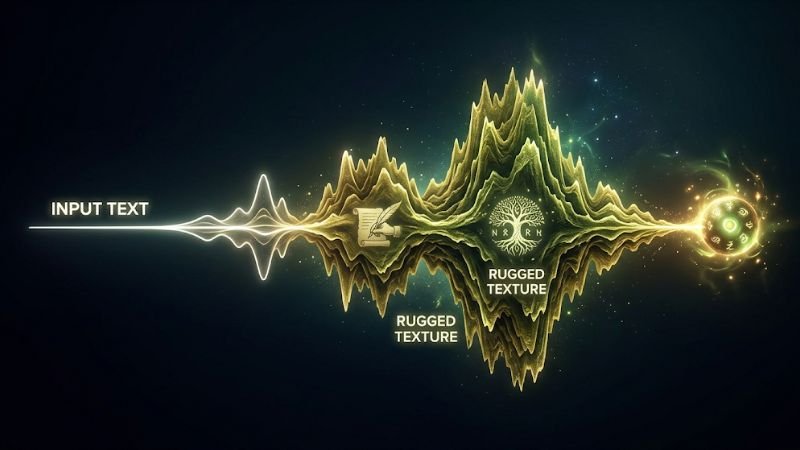
Unlike generic text to speech, an old mystical voice text to speech engine is trained or fine-tuned to add:
- A slower, more deliberate speaking pace
- A lower, weathered pitch that suggests age and experience
- Subtle vocal texture such as rasp, breathiness, or a slight quiver
- Regional or timeless accents (British, Eastern European, Scottish Highland, and invented “ancient” dialects are common)
- Dramatic pauses that give weight to important lines
The result is a voice that feels less like a computer reading text and more like a character speaking from another era.
Why the Mystical AI Voice Trend Is Growing So Fast
A few years ago, AI narration was mostly used for straightforward audiobooks and customer service bots. Today, the demand for an old mystical voice text to speech generator comes from a much wider audience:
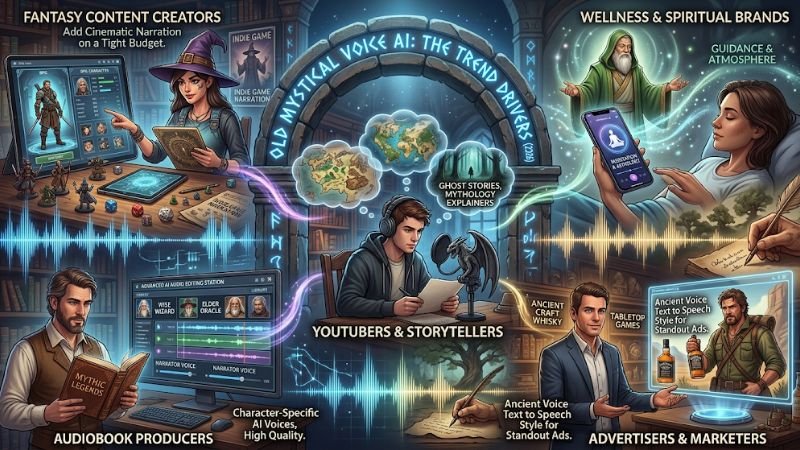
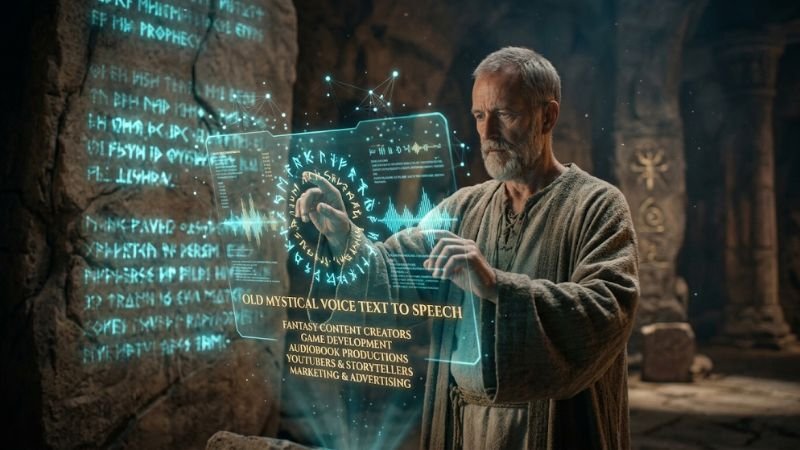
1. Fantasy content creators. Game developers building RPGs need a wizard, oracle, or ancient narrator without hiring a full voice cast. An old mystical voice generator lets indie studios add cinematic narration on a tight budget.
2. Wellness and spiritual brands. Meditation apps, tarot readers, and astrology creators want a calming, sage-like voice to guide listeners through a session. A mystical narrator voice adds credibility and atmosphere that a standard TTS voice cannot.
3. YouTubers and storytellers. Horror storytelling channels, mythology explainers, and “ancient legends” content thrive on atmosphere. An old wise voice AI reading a script about forgotten kingdoms hits differently than a neutral narrator voice.
4. Audiobook producers. Fantasy and mythology audiobooks increasingly use character-specific AI voices for narrators, elders, and side characters, cutting production costs while keeping quality high.
5. Advertisers and marketers. Believe it or not, brands selling everything from craft whisky to tabletop games now use an ancient voice text to speech style in ads to stand out from the sea of generic “announcer” voices.
This convergence of gaming, wellness, and content creation is exactly why old mystical voice text to speech has become one of the fastest-growing niches inside the broader AI voice generator market.
How Old Mystical Voice Text to Speech Technology Actually Works
Modern old mystical voice text to speech tools are built on neural text-to-speech (TTS) models, the same underlying technology that powers realistic AI voiceover platforms. Here is a simplified breakdown of the process:
- Text input – You type or paste your script into the platform.
- Voice selection – You choose a pre-built mystical persona (an “ancient philosopher,” “mystic oracle,” or “shadow mystic”) or design a custom one using sliders for depth, texture, and mood.
- Prosody modeling – The AI model predicts pitch, rhythm, stress, and pauses based on the emotional and contextual cues in your text.
- Waveform generation – A neural vocoder converts the predicted speech patterns into an actual audio waveform.
- Fine-tuning – Many platforms let you adjust speed, pitch, emphasis, and even add breathing or pauses manually before exporting the final file.
Some tools also support voice cloning, meaning you could record a short human sample and have the AI apply an aged, mystical texture on top of that voice’s characteristics. This is especially useful for game studios that want a consistent “house voice” across multiple projects.
Best Use Cases for a Mystical Narrator Voice
An old mystical voice text to speech generator isn’t just a novelty. Here are the practical, revenue-generating use cases creators are finding right now:
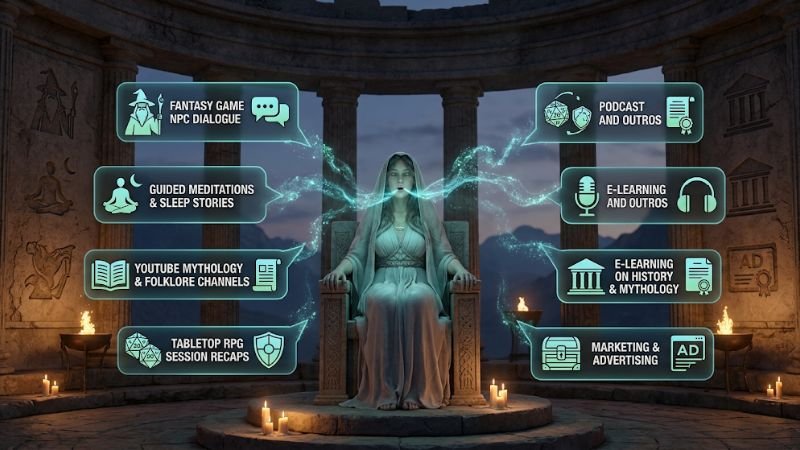
- Fantasy game NPC dialogue – Give your wizard, hermit, or dragon-keeper NPC a distinct, memorable voice without a recording studio.
- Guided meditations and sleep stories – A soft, ancient-sounding narrator can make a meditation app feel more premium and calming.
- YouTube mythology and folklore channels – Narrate legends, ghost stories, and historical mysteries with a voice that matches the mood.
- Tabletop RPG session recaps – Dungeon masters use mystical AI narration to open or close campaign sessions.
- Podcast intros and outros – A short mystical voiceover can brand your show instantly.
- E-learning on history and mythology – An old wise voice AI adds gravitas to educational content about ancient civilizations.
- Marketing and advertising – Craft beverages, tabletop games, and fantasy-themed products use mystical voice text to speech to stand out.
Top Old Mystical Voice Text to Speech Tools in 2026
There is no shortage of platforms offering mystical, ancient, or sage-style AI voices today. Below is a comparison of the tools most frequently used by creators looking for old mystical voice text to speech output.
| Platform | Best For | Mystical Voice Options | Voice Cloning | Starting Price | Languages |
|---|---|---|---|---|---|
| ElevenLabs | Most realistic old mystical voice text to speech overall | Wise old sage library (“Ancient Philosopher,” “Mystic Oracle,” “Highland Keeper”) | Yes, from a 1-minute sample | Free tier; paid plans from roughly $5–$6/month | 29+ (up to 70+ on newer models) |
| Fish Audio | Free, quick mystical voice experiments | Multiple prebuilt personas (“Mystic Narrator,” “Mystical Elder Voice,” “Mythic Speaker”) | Limited on free tier | Free to try | Multiple, auto-detected |
| Morphic | Custom-built wizard and mystic voices with lip-sync video | Adjustable archetype, depth, texture, and mood sliders for fully custom mystical voices | Not the primary focus (voice + face animation) | Custom/gradient pricing | Varies |
| Murf AI | Studio-quality narration with manual fine controls | General narrator voices adaptable to a mystical tone with pitch/pace adjustments | Limited | Around $29/month (Business tier) | 20+ |
| Play.ht | Long-form fantasy audiobooks and podcasts | Broad voice library with slow, deep narrator options suitable for mystical narration | Yes | Around $31/month (annual Pro) | 140+ |
A quick note on how to read this table: platforms like ElevenLabs and Fish Audio ship pre-built “mystical” or “old sage” personas out of the box, which makes them the fastest route to an authentic old mystical voice text to speech result. Murf AI and Play.ht are more general-purpose voiceover tools, but their deep, slow narrator voices can be manually adjusted to achieve a similar mystical, ancient tone if you already have a subscription for other content needs.
Pros and Cons of Using AI for Mystical Voice Narration
Like any technology, old mystical voice text to speech comes with real advantages and real limitations. Here’s an honest breakdown.
Pros
- Massive cost savings – Hiring a professional voice actor with the exact “ancient wizard” quality you want can cost hundreds of dollars per session. An AI mystical voice generator delivers similar quality for a fraction of the price, often starting free.
- Unlimited revisions – Don’t like the pacing on line 12? Regenerate it instantly instead of booking another studio session.
- Consistency across long projects – A game with 500 lines of dialogue from the same wizard character stays perfectly consistent in tone from start to finish.
- Speed – What used to take days of casting, scheduling, and recording now takes minutes.
- Multilingual reach – Many old mystical voice text to speech platforms support dozens of languages, so your ancient narrator can speak to a global audience without re-recording.
- Creative flexibility – Sliders for depth, texture, and mood let you design a voice that doesn’t exist in the real world, something genuinely difficult to cast a human actor for.
Cons
- Occasional uncanny moments – Even the best old mystical voice text to speech engines can mispronounce invented fantasy names or produce an unnatural pause in the wrong spot.
- Subscription and character limits – Free tiers are generous for testing but get expensive quickly for long-form projects like full audiobooks.
- Less emotional range than a trained actor – A human voice actor can improvise subtle emotional beats that even advanced AI still struggles to match consistently.
- Ethical and licensing gray areas – Voice cloning features raise real questions about consent and originality, especially if you’re cloning a recognizable human voice and aging it into a “mystical” character.
- Learning curve for custom voices – Getting a truly unique mystical tone (rather than a generic “old man narrator”) often takes trial and error with pitch, texture, and pacing settings.
How to Choose the Right Old Mystical Voice Generator
With so many old mystical voice text to speech tools on the market, here’s a simple framework to help you decide:
1. Define your use case first. A meditation app needs a soft, soothing sage voice. A horror channel needs something raspier and more ominous. Don’t pick a tool before you know the emotional tone you’re chasing.
2. Test the free tier before committing. Almost every major platform, from ElevenLabs to Fish Audio, lets you generate a short sample for free. Use this to compare how each mystical persona actually sounds with your own script, not just their demo text.
3. Check character or word limits. If you’re producing a full audiobook or a long RPG script, calculate your total word count and compare it against each platform’s monthly character allowance before subscribing.
4. Look for fine-tuning controls. The best old mystical voice text to speech results usually come from platforms that let you adjust speed, pitch, emphasis, and pauses manually rather than relying purely on the default persona.
5. Consider export flexibility. If you need the audio for a game engine or video editor, confirm the platform exports in the format you need (WAV, MP3) without watermarking on paid tiers.
6. Factor in commercial licensing. If you’re monetizing your content, make sure your plan explicitly includes commercial usage rights for the generated audio.
Tips for Getting the Most Authentic Mystical Narration
Even the best old mystical voice text to speech engine performs better with a well-written script. A few practical tips:
- Write in shorter sentences with natural pauses. Long, run-on sentences make even human narrators sound rushed; AI models handle punctuation-based pacing far better than complex clauses.
- Use punctuation intentionally. Ellipses and em dashes often trigger more natural, dramatic pauses in the generated audio.
- Avoid overly modern slang. Keep your script in a timeless register to match the mystical persona you’ve selected.
- Preview and regenerate difficult lines. If a fantasy name or invented word sounds off, try spelling it phonetically to guide the pronunciation.
- Layer in ambient sound design afterward. A crackling fire, distant wind, or soft chime added in post-production can elevate an old mystical voice text to speech clip from good to genuinely immersive.
Getting Started with Old Mystical Voice Text to Speech in Under 10 Minutes
If you’ve never used an AI voice generator before, the process is far simpler than it sounds. Here’s a quick walkthrough that applies to almost every platform on the market:
- Create a free account. Most old mystical voice text to speech platforms let you sign up with an email address and start generating audio within minutes, no credit card required for the free tier.
- Paste a short sample of your script. Start with a single paragraph rather than your entire project. This lets you test how the voice handles your specific writing style, invented names, and punctuation before committing time to a full recording.
- Browse the mystical voice library. Look for categories like “narrator,” “elder,” “sage,” or “fantasy character.” Many platforms let you filter by gender, age, and accent to narrow down the right fit quickly.
- Preview multiple voices side by side. Don’t settle on the first option. Generate the same paragraph with two or three different mystical personas so you can compare pacing, texture, and emotional tone.
- Adjust the settings. Once you find a voice you like, fine-tune the speed, pitch, and stability sliders until the delivery matches the mood of your project.
- Export and test in context. Drop the exported audio into your video, game engine, or podcast timeline to hear how it sits alongside music and sound effects before finalizing.
This trial-and-error approach is the fastest way to land on a genuinely convincing old mystical voice text to speech result rather than settling for the first generic “old man narrator” preset a platform offers.
The Future of Mystical AI Narration
The old mystical voice text to speech space is still evolving quickly. As neural TTS models continue to improve, expect even more nuanced emotional control, better handling of invented fantasy vocabulary, and tighter integration with video and game engines. Real-time generation is also becoming more common, meaning interactive games could soon let an NPC “wizard” respond dynamically in a fully mystical voice rather than relying on pre-recorded lines. For creators willing to experiment now, getting comfortable with today’s tools puts you ahead of the curve as the technology matures further.
Frequently Asked Questions
Is old mystical voice text to speech free to use? Most major platforms, including ElevenLabs and Fish Audio, offer free tiers that let you generate a limited amount of mystical narration at no cost. For larger or commercial projects, you’ll typically need a paid plan.
Can I use an old mystical voice text to speech generator for commercial projects like games or YouTube videos? Yes, but always check the specific platform’s licensing terms. Most paid tiers include commercial usage rights, while free tiers sometimes restrict commercial use or require attribution.
Which platform has the most realistic old sage or wizard voice? ElevenLabs is widely regarded as producing some of the most natural-sounding mystical and sage-style voices currently available, thanks to its dedicated wise-old-sage voice library and fine prosody control.
Do I need any technical or audio editing skills to use these tools? No. Most old mystical voice text to speech platforms are designed for non-technical users. You type or paste your script, choose a voice, and export the audio. Editing skills only become useful if you want to layer in music or sound effects afterward.
Can these tools create a custom mystical voice instead of using a preset? Yes. Platforms like Morphic let you build a custom mystical voice from scratch using sliders for archetype, depth, texture, and mood, so you’re not limited to whatever presets a platform ships with.
Is voice cloning available for mystical or ancient character voices? Several platforms, including ElevenLabs and Play.ht, support voice cloning from a short audio sample. This means you can potentially clone a human voice and then apply aging or mystical vocal characteristics on top of it, though ethical use and consent should always be considered.
Conclusion
Old mystical voice text to speech has moved well beyond a niche experiment for hobbyist game developers. It’s now a legitimate production tool used by meditation apps, mythology YouTubers, indie game studios, and audiobook publishers who want the gravitas of an ancient sage or the mystery of an oracle without the cost and scheduling headaches of traditional voice casting.
If realism and voice variety matter most to you, platforms like ElevenLabs and Fish Audio currently lead the pack for out-of-the-box mystical personas. If you want a fully custom wizard or mystic voice built from scratch, tools like Morphic give you granular creative control. And if you already use a general-purpose voiceover platform like Murf AI or Play.ht for other projects, their deep narrator voices can often be tuned to deliver a convincing old mystical voice text to speech result without adding another subscription.
Whichever tool you choose, the key to a genuinely immersive result isn’t just the AI model, it’s the script you feed it. Write with intention, use punctuation to guide pacing, and don’t be afraid to regenerate a line until it truly sounds like it’s coming from someone who has lived a thousand years and has a story worth telling.
