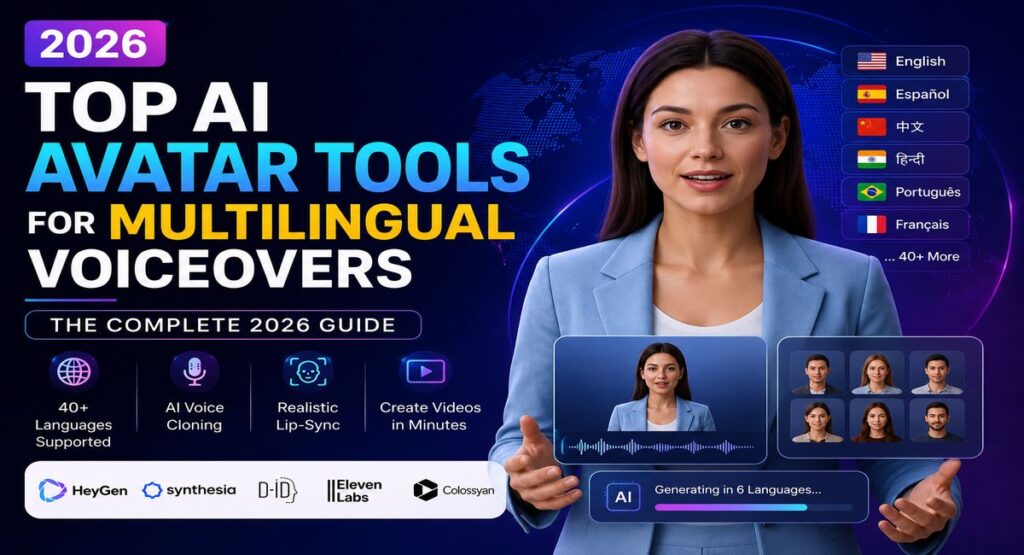
If you’re searching for the top AI avatar tools for multilingual voiceovers, chances are you’re tired of one thing: hiring a new voice actor, translator, and video editor every single time you want to enter a new market. That’s the exact problem AI avatars, AI voice cloning, and text-to-speech localization solve together. This guide is based on how marketers, e-learning teams, and solo creators actually use these AI-powered video creation tools in real campaigns, not the sales page version.
By the end, you’ll know which multilingual video generation tools are worth your time, how AI lip-sync and voice cloning technology actually works, when they’re worth using, and how to avoid the mistakes that quietly waste money.
| Tool | Best For | Languages Supported | Custom Avatar Option | Starting Price (approx.) | Standout Feature |
|---|---|---|---|---|---|
| HeyGen | Marketing & social video | 40+ | Yes | Free tier / paid plans from ~$24/mo | Strong lip-sync accuracy, quick turnaround |
| Synthesia | Corporate training & e-learning | 130+ | Yes (enterprise) | Plans from ~$29/mo | Large avatar library, enterprise compliance features |
| Leadde.ai | Bulk multilingual ad testing | Multiple major languages | Yes | Tiered subscription | Built for rapid creative testing at scale |
| ElevenLabs (voice layer) | High-quality voice cloning | 30+ | Voice only | Free tier / paid plans | Best-in-class voice realism, often paired with avatar tools |
| D-ID | Quick avatar generation via API | Multiple | Yes | Usage-based pricing | Developer-friendly API integration |
| Colossyan | Internal comms & HR training | Multiple | Yes | Plans from ~$19/mo | Simple editor for non-technical teams |
The table above compares the top AI avatar tools for multilingual voiceovers, covering language coverage, avatar customization, pricing, and ideal use cases. While every tool supports AI-powered video creation, they differ in these details. Use this overview to identify the best platform before exploring each tool in detail.
What Are the Top AI Avatar Tools for Multilingual Voiceovers?
Simple definition: they’re synthetic media platforms that create a talking digital presenter — often called a virtual presenter or AI spokesperson — who can speak in almost any language, with a voice and lip movements generated by AI.
Instead of filming a real person for every language version, you write a script once. The tool speaks it using text-to-speech technology, moves the avatar’s mouth to match through AI lip-sync, and gives you a finished, localized video in minutes.
People use these multilingual voiceover tools for:
- Product explainer videos
- Course and e-learning content
- Onboarding and tutorials
- Global ad campaigns
- Short-form social videos
- Customer support and FAQ content
One script. One avatar. Many languages. That’s the whole appeal of the top AI avatar tools for multilingual voiceovers, and it’s why adoption has grown so fast across marketing and training teams alike.
Why Multilingual AI Avatar Videos Matter More Than Ever
Video has become the default format for marketing, training, and support. But most businesses still only produce it in one language, usually English.
That leaves a huge gap. A viewer in Brazil, Indonesia, or Germany is far more likely to trust and convert on a localized video that speaks their language naturally, not one with awkward subtitles bolted on.
Traditionally, fixing this meant filming separate versions with local talent in every market. That’s expensive and slow, which is exactly why most brands never bothered with true video localization.
AI avatars and voice cloning software remove that barrier. A company that could only ever afford one language version can now realistically produce five or six, testing which markets respond best before committing bigger budgets. This is exactly the gap the top AI avatar tools for multilingual voiceovers were built to close.
How AI Voice Cloning and Lip-Sync Technology Actually Work
Most of the top AI avatar tools for multilingual voiceovers follow a similar process behind the scenes, even if they brand it differently.
- Pick or build an avatar. You choose a ready-made avatar, or in some tools, train a custom AI avatar using your own face and voice.
- Add your script. You type it in, or paste a translated version. Better tools adapt the wording instead of translating word-for-word, which matters more than people expect.
- Generate the voice. A text-to-speech engine turns your script into audio. Good ones sound like a person talking. Cheap ones sound like a GPS giving directions.
- Sync the lips. The avatar’s mouth and expressions get matched to the audio using AI lip-sync technology. This step is where most quality differences show up between platforms.
- Export and use it. Once it’s rendered, you download it and use it wherever you need — ads, YouTube, LinkedIn, internal training portals, or your website.
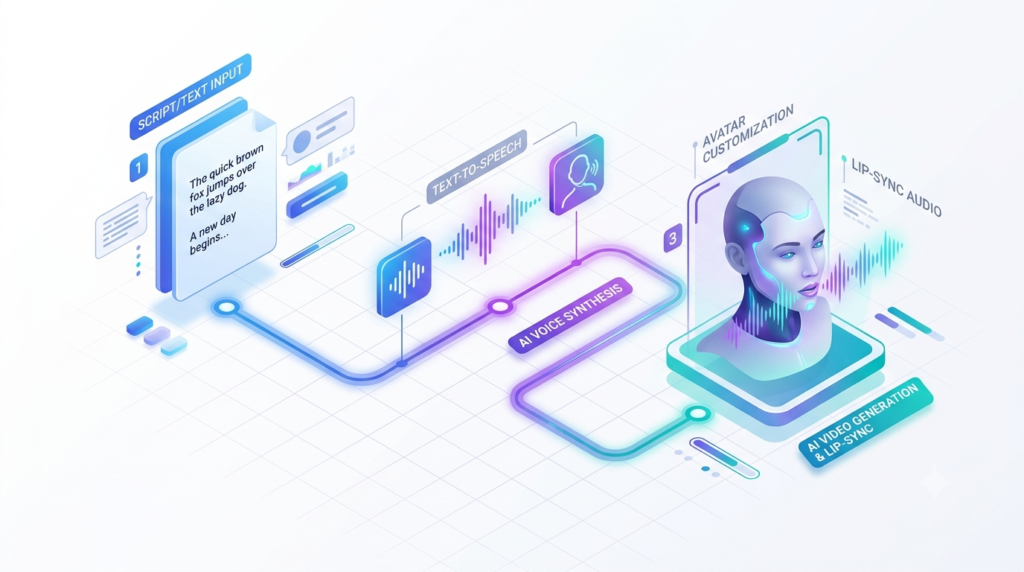
That’s it. No filming, no studio booking, no reshoots when the script changes. Whichever of the top AI avatar tools for multilingual voiceovers you pick, this basic workflow stays roughly the same.
The Best AI Avatar Tools for Multilingual Voiceovers in 2026
Synthesia is the go-to for training and e-learning avatars. It supports well over a hundred languages and is built for companies that need consistency across regions, not just a quick social clip. It’s often the first choice for HR and compliance training because of how structured the workflow is. It’s consistently ranked among the top AI avatar tools for multilingual voiceovers for enterprise use cases.
HeyGen is popular with marketers because it’s fast and built with social platforms in mind. If you need to test ad creatives quickly across a few languages, this is usually the first AI avatar generator people reach for.
Leadde.ai leans into volume testing — generating several script and language variations quickly so you can see what actually performs before spending real ad budget on any single version.
ElevenLabs isn’t an avatar tool by itself, but it’s often paired with one just for voice quality and AI voice cloning. If your videos sound flat or robotic, this is usually the fix marketers reach for.
D-ID is the developer-friendly option. If you want to plug avatar generation directly into your own app, website, or customer platform, this API-based tool is built for that kind of integration.
Colossyan is simple and works well for HR and internal comms teams who don’t want to deal with a complicated editor or a steep learning curve.
None of these tools are perfect on their own. Most experienced teams end up using two or three together — one for the avatar, one for the voice, and one for editing and captions — to get the best results from their multilingual voiceover tools.
Realism Matters More Than How Many Languages You Get
Here’s something most comparisons skip when ranking the top AI avatar tools for multilingual voiceovers: a platform that supports 130 languages badly is worse than one that supports 20 languages well.
The problems that actually hurt performance:
- Lip-sync that’s slightly off. Even half a second of delay and viewers notice something’s wrong, even if they can’t say what.
- Flat, robotic tone. No rise and fall in the voice makes it feel like a script being read, not a message being delivered.
- Word-for-word translation. It ignores how people actually talk, and it shows almost immediately to native speakers.
- Repetitive gestures. The same hand movement every ten seconds starts to feel uncanny fast.
Before committing to a full production run, generate a 15-20 second sample in your target language first. Almost every AI avatar platform lets you do this for free, and it saves you from finding out the hard way after a full video is already rendered.
Step-by-Step: Creating Your First Multilingual Avatar Video
If you’re starting from zero, here’s a simple path that works for most teams using the top AI avatar tools for multilingual voiceovers.
- Start with one strong script in your primary language. Keep sentences short and conversational — long, formal sentences almost always sound worse once converted to speech.
- Pick one or two priority markets to test first. Trying to launch in ten languages at once makes it much harder to catch quality issues early.
- Generate a short sample before the full video. This single step prevents most of the wasted credits and rework people complain about.
- Get a native speaker to review the sample, even if it’s just a quick message to a friend or a freelancer. This catches tone issues an AI translation can’t.
- Once the sample sounds right, generate the full video, add captions and any B-roll, and publish it as a test rather than a final campaign asset.
- Only scale up languages and budget once you’ve confirmed a version actually performs.
AI Avatars vs Human Voiceover Artists
People ask this constantly, and the honest answer is: it depends on what you’re trying to do.
AI wins on speed. A multilingual video that used to take days now takes minutes with the right tools. It also wins on cost — no studio booking, no per-language voice actor fees stacking up. And it’s great for testing multiple ideas quickly before you know which one will actually work with real audiences.
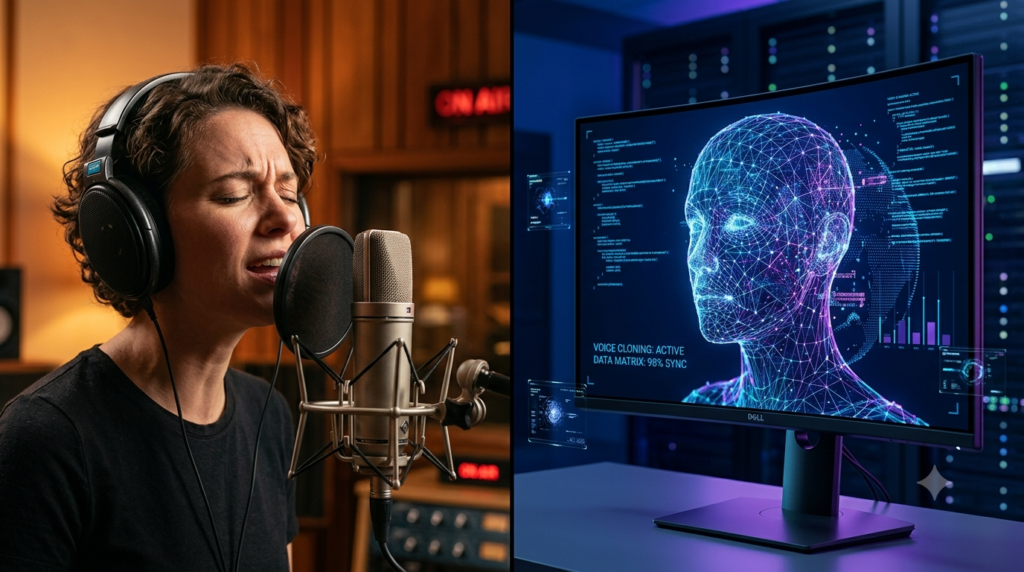
Humans still win on emotional depth. A real voice carries subtlety that AI voice cloning hasn’t fully cracked yet, especially for storytelling or sensitive topics. Some audiences also just trust a human voice more, particularly for flagship brand content or anything emotionally driven.
The smartest teams don’t pick one over the other. They use the top AI avatar tools for multilingual voiceovers to test fast and cheap, find the winning script and angle, then bring in a human voice or on-camera talent to produce the final, scaled version. You get the speed of AI and the polish of a real person, right where each one matters most.
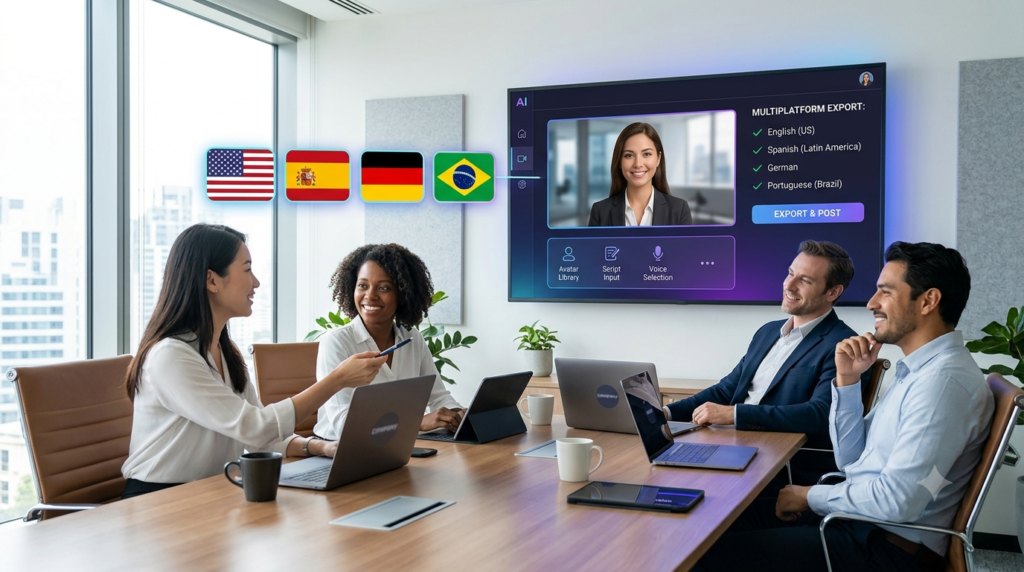
AI Avatar Tools for Different Business Sizes
Solo creators and freelancers usually benefit most from speed. A simple tool like HeyGen or Colossyan lets one person produce daily content without a filming setup, which is often the only reason consistent posting is possible at all.
Small marketing teams tend to get the most value from testing tools like Leadde.ai, since the goal is usually finding a winning ad concept quickly rather than producing one polished flagship video.
Mid-size SaaS and e-commerce companies often need a mix — an AI avatar tool for volume, paired with a stronger voice engine like ElevenLabs, plus a human editor to keep everything on-brand.
Larger enterprises, especially in training or compliance-heavy industries, usually lean toward Synthesia because of its scale, language depth, and more structured enterprise workflows.
There’s no single “best” tool across all of these groups. The right choice among the top AI avatar tools for multilingual voiceovers depends entirely on whether you’re optimizing for speed, testing volume, or long-term consistency in your video localization strategy.
Real Ways People Are Actually Using AI Avatar and Voiceover Tools
- Launching products in new markets. A brand entering three or four countries can test different scripts and languages in a single week instead of waiting on production schedules for each region separately.
- Training teams across offices. One training video, localized into each office’s language, without flying anyone in or reshooting with a new presenter every time policies change.
- Onboarding for SaaS products. Walkthroughs in the user’s native language, without engineering time spent on subtitles every time the interface updates.
- Solo creators posting daily. Turning a two-hour filming process into a two-minute generation, which is often the only reason some creators can post multiple times a day at all.
- Support and FAQ content. Answering common customer questions in a few languages instead of relying only on written help docs that many users skip entirely.
- Internal company updates. Leadership messages translated and delivered consistently across every regional office, without needing the executive to personally record five versions.
These real-world use cases are exactly why the top AI avatar tools for multilingual voiceovers have moved from a novelty to a standard part of many marketing and training stacks.
What’s Genuinely Good About This, and What’s Not
The upside is real: production is faster, cheaper, and easier to test at scale. Branding stays consistent no matter how many languages you add, since it’s the same AI avatar every time. And you don’t need to manage a different voice actor or filming schedule for every market.
Weighing both sides is the fastest way to decide if the top AI avatar tools for multilingual voiceovers are actually right for your team right now.
The downside is also real: voice and lip-sync quality still varies a lot depending on the language. Literal translations miss cultural nuance unless someone checks them carefully. Overly polished avatars can feel out of place on casual platforms like TikTok, where imperfection often performs better. And most teams underestimate how much review and editing time they’ll still need — this isn’t a zero-effort solution, just a faster one.
The Costs Nobody Mentions in the Marketing
AI avatars cut production costs, but they don’t make video localization free.
You’ll likely still need someone who speaks the target language to review the final video before it goes live. You’ll sometimes need to re-render clips that came out slightly off, which eats into your credit allowance. You’ll probably still need an editor to add captions, B-roll, or platform-specific cuts.
And you’ll likely end up paying for more than one tool, not just the one you signed up for first. A separate voice engine, an editing app, and sometimes a translation service all tend to join the stack over time.
None of this cancels out the savings compared to traditional filming. It just means the savings from the top AI avatar tools for multilingual voiceovers aren’t quite as large as the pricing page suggests.
How to Pick the Right Tool from the Top AI Avatar Tools for Multilingual Voiceovers
Start with your actual use case. Marketing and ad testing lean toward HeyGen or Leadde.ai. Training and internal comms lean toward Synthesia or Colossyan.
Then check how many languages you genuinely need. Don’t pay for support of 130 languages if your audience only speaks five.
Ask yourself if you need a custom brand avatar, or if a stock one is fine for your use case. Look at your budget per video, not just the monthly subscription fee — credits and premium voice add-ons pile up fast.
Make sure you have someone who can review the final language output, even if it’s a freelancer you only bring in occasionally for spot checks.
Last thing: think about where the video will actually be watched. A polished corporate avatar works fine in a training portal but often feels out of place on TikTok, where a little imperfection tends to perform better.
Trends to Watch in AI Avatar Voiceovers
Voice quality is closing the gap with human recordings faster than lip-sync accuracy is. Expect voices to keep sounding more natural, while visual realism improves more slowly.
More platforms are adding built-in localization review, not just translation, which should reduce the need for a separate native-speaker check over time.
Custom avatar creation is becoming faster and cheaper, meaning more brands will have their own consistent AI spokesperson instead of relying on stock avatar libraries.
Short-form, platform-native editing features are being built directly into avatar tools, which should reduce the number of separate apps needed in a typical workflow.
Watching these trends closely will help you pick from the top AI avatar tools for multilingual voiceovers a year from now, not just today.
What Makes a Multilingual Avatar Video Feel Native, Not Robotic
There’s a difference between a video that’s technically correct and one that actually feels like it belongs on the platform it’s posted to. Getting this right is what separates the top AI avatar tools for multilingual voiceovers from the ones that just check a language-count box.
Natural pacing matters more than perfect grammar. A slight pause before a key point, or a small change in tone, makes an avatar sound like it’s talking to you instead of reading at you.
Captions with a bit of personality — emphasis, emojis, casual phrasing — tend to outperform plain, formal subtitles, especially on TikTok and Reels.
Cutting away from the avatar every few seconds, even briefly, keeps attention far better than a single unbroken shot of a talking head for the entire video.
And imperfection helps more than people expect. A video that looks slightly informal often earns more trust on social platforms than one that looks like a corporate ad, even if the corporate version is technically higher quality.
Mistakes That Quietly Ruin Results
Even with the top AI avatar tools for multilingual voiceovers at your disposal, a few recurring mistakes quietly ruin results. Skipping native-language review is the biggest one. A small phrasing mistake can look careless, or worse, come across wrong in a different culture entirely.
Letting the avatar dominate the whole video is another common issue. Mixing in product footage, screen recordings, or B-roll almost always performs better than a static talking head for the full duration.
Ignoring where the video will be posted matters too. What works in a webinar rarely works the same way on Reels or TikTok, where pacing and tone need to feel more casual.
And chasing more languages instead of better quality is a common trap. Three languages done well usually beats ten done poorly, both in viewer trust and in actual conversion numbers.
FAQs About the Top AI Avatar Tools for Multilingual Voiceovers
What are the best AI avatar tools for multilingual voiceovers right now? Synthesia, HeyGen, Leadde.ai, D-ID, and Colossyan are among the most used AI avatar tools for multilingual voiceovers, often paired with ElevenLabs for better voice quality.
Are AI avatar voiceovers as good as real voice actors? For fast testing and cost savings, yes. For emotionally heavy or flagship brand content, many teams still bring in a human voice once they know what’s working.
Can AI avatars really sound natural in any language? Most tools claim dozens to over a hundred languages, but quality varies a lot by language. Always test a short clip before committing to a full production run.
How much does a multilingual AI avatar video cost? It varies by platform and voice tier, but it’s almost always far cheaper per video than traditional filming, especially once you’re producing in volume.
Do I still need a human translator if I use these tools? Ideally, yes. AI translation keeps improving, but a native speaker catches tone and cultural details that automated tools still miss.
Which industries benefit the most from AI avatar tools for multilingual voiceovers? E-commerce, SaaS, corporate training, and global marketing teams see the biggest returns, since they all repeat the same message across multiple markets.
Should I use one all-in-one tool or a few specialized ones? Most experienced teams use two or three tools together — one for the avatar, one for voice, one for editing — rather than relying on a single platform for everything.
How long does it take to produce a multilingual avatar video? Once your script is ready, most tools can generate a full video in a few minutes per language, though review and editing still add extra time before it’s ready to publish.
Can small businesses use these tools without a big budget? Yes. Several platforms offer free trials or low-cost entry plans, making this one of the few video production methods that scales down to a single-person team just as well as a large company.
Do AI avatar videos work well on social media, or only for formal content? They work on both, but the editing style needs to match the platform. A casual, slightly imperfect cut performs better on TikTok or Reels, while a cleaner, more structured version suits training portals or webinars.
What’s the biggest risk of relying only on AI-generated voiceovers? The biggest risk is publishing without a native-language check. A translation can be technically accurate and still sound wrong to a native speaker, which can quietly hurt trust even if nothing looks obviously broken.
Final Thoughts
Choosing from the top AI avatar tools for multilingual voiceovers comes down to your use case, budget, and language needs. Synthesia, HeyGen, Leadde.ai, D-ID, and Colossyan have made it possible for almost any team to produce localized videos at a scale that used to require a full production budget.
But these AI avatar and voice cloning tools work best as an accelerator, not a shortcut around good judgment. Generate fast, test across markets, get a native speaker to check the language, and save the human-led polish for the content that’s already proven to work.
Used that way, this isn’t just about saving time or money. It’s about finding out faster what actually connects with the people you’re trying to reach.
