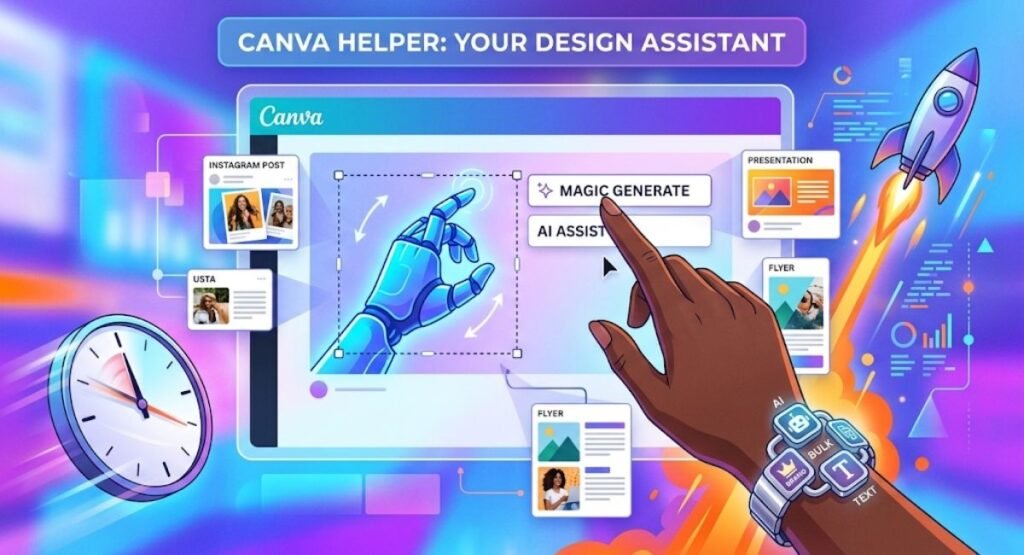
In today’s fast-paced digital world, having the right design tool can make or break your online presence. This is exactly where a Canva Helper comes into play, acting as a smart assistant, extension, or AI feature that makes working within Canva easier and faster. In this comprehensive guide, we will explore everything you need to know about it, from its benefits and drawbacks to comparisons and frequently asked questions.
What Is a Canva Helper?
A Canva Helper is essentially a supportive tool, plugin, or AI-powered assistant integrated with Canva that helps users design more effectively. It could be a browser extension, a third-party app connected through the Canva App Store, or even an AI chatbot trained to generate design ideas, suggest color palettes, write copy, or automate workflow tasks. Its primary goal is to reduce the time and effort required to produce professional-quality designs.
For beginners, such a tool acts like a personal design assistant that guides them through the entire creative process. For advanced users and businesses, it becomes a productivity booster that saves hours of manual work each week. As Canva continues to grow in popularity among content creators, marketers, and entrepreneurs, the demand for a reliable design companion has increased significantly.
Why Do You Need a Canva Helper?
Many people assume that Canva is already simple enough and does not require additional assistance. While this is true to some extent, the platform’s vast library of templates, fonts, elements, and features can sometimes feel overwhelming. This is where such a tool simplifies the complexity by offering smart suggestions, automating repetitive design tasks, and ensuring brand consistency across multiple projects.
Here are some common reasons why individuals and businesses rely on one:
- To generate design ideas quickly when facing creative block
- To maintain consistent branding across different platforms
- To automate resizing designs for various social media formats
- To get AI-generated captions, headlines, or marketing copy
- To organize and manage multiple design projects efficiently
- To access premium-like features without upgrading to a paid plan
These reasons highlight why a Canva Helper has become an essential part of many creators’ workflows, especially those who manage multiple social media accounts or client projects simultaneously.
Key Features of a Good Canva Helper
Not all tools labeled this way offer the same value. When choosing the right one for your needs, it is important to look for specific features that genuinely improve your design process. Some of the most valuable features include:
1. AI-Powered Design Suggestions
A quality assistant uses artificial intelligence to analyze your content and suggest relevant templates, layouts, and color schemes. This eliminates the guesswork involved in choosing the right design elements.
2. Content Generation
Many of these tools now include built-in copywriting features that generate captions, taglines, and marketing text directly within the design canvas, saving users from switching between multiple apps.
3. Brand Kit Integration
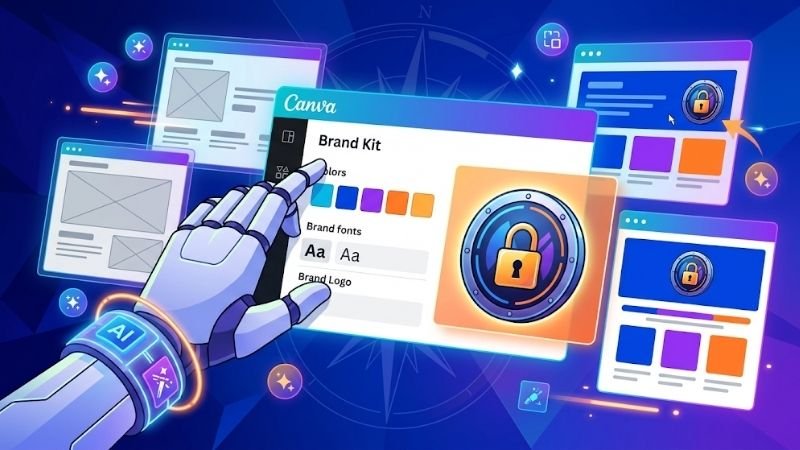
A reliable option should support brand kit synchronization, ensuring that your logo, fonts, and brand colors remain consistent throughout every design you create.
4. Bulk Resizing and Export
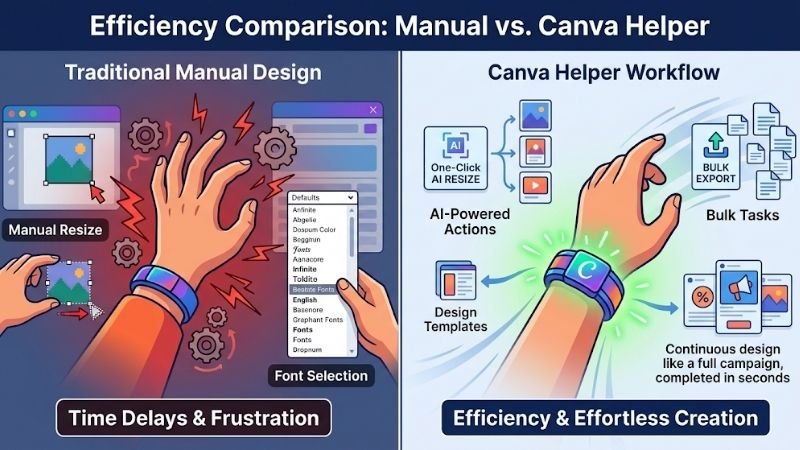
One of the most time-consuming tasks in design is resizing content for different platforms like Instagram, Facebook, LinkedIn, and Pinterest. A good assistant automates this process instantly.
5. Template Recommendations Based on Industry
Some advanced tools analyze your niche or industry and recommend templates specifically tailored to your business type, whether it’s real estate, fitness, fashion, or e-commerce.
6. Collaboration and Workflow Management
For teams working on multiple projects, this kind of assistant often includes collaboration features that allow real-time editing, commenting, and approval workflows.
Pros and Cons of Using a Canva Helper
Like any digital tool, it comes with its own set of advantages and limitations. Understanding both sides will help you make an informed decision before integrating one into your workflow.
Pros
- Saves Time: Automates repetitive tasks such as resizing, formatting, and content generation, allowing users to focus on creativity rather than manual work.
- Beginner Friendly: Even users with zero design experience can produce professional-looking graphics with guided assistance.
- Improves Consistency: Helps maintain a consistent brand identity across all marketing materials and social media platforms.
- Boosts Productivity: Ideal for freelancers, agencies, and businesses managing multiple client projects simultaneously.
- Cost-Effective: Many of these tools are affordable or even free, reducing the need to hire a professional designer for basic tasks.
- Enhances Creativity: AI-driven suggestions often introduce design ideas that users might not have considered on their own.
Cons
- Learning Curve for Advanced Features: While basic functions are easy to use, some advanced automation features may require time to fully understand.
- Dependency on AI Suggestions: Overreliance on automated suggestions can sometimes limit originality and creative uniqueness.
- Limited Customization in Free Versions: Many free versions restrict premium features behind a paywall, limiting functionality for casual users.
- Integration Issues: Certain third-party extensions may not always sync perfectly with the latest Canva updates.
- Internet Dependency: Since most of these tools operate online, a stable internet connection is required for smooth performance.
Despite these minor drawbacks, the overall value that a Canva Helper brings to the table far outweighs its limitations, especially for users who create content regularly.
How a Canva Helper Improves Your Workflow
Beyond being a single tool, it often works alongside other resources such as a Canva design assistant, a Canva AI tool, or a dedicated Canva productivity extension. Some users also rely on a Canva template generator or a broader design workflow automation setup to handle repetitive tasks. Whether it functions as a standalone Canva plugin, a graphic design assistant, or a full content creation assistant, the core purpose remains the same: helping you design faster while keeping every project aligned with your brand.
Let’s take a closer look at how it transforms the everyday design process for different types of users.
For Social Media Managers
Social media managers often need to create dozens of posts weekly across multiple platforms. This kind of assistant streamlines the process by offering bulk resizing, scheduling integration, and content suggestions tailored to each platform’s specifications.
For Small Business Owners
Small business owners who lack the budget to hire a full-time designer benefit greatly from having one on hand. It allows them to create marketing materials, flyers, and social posts that look professionally designed without additional costs.
For Students and Educators
Students use Canva extensively for presentations, assignments, and infographics. Such a tool assists by suggesting layouts, generating summaries, and improving overall visual appeal for academic projects.
For Freelancers and Agencies
Freelancers managing multiple clients rely on this kind of support to speed up project turnaround time while maintaining unique branding guidelines for each client.
Canva Helper vs Traditional Design Tools: A Comparison
To better understand its value, let’s compare it with traditional design approaches such as hiring a designer or using complex software like Adobe Photoshop or Illustrator.
| Feature | Canva Helper | Traditional Design Software | Hiring a Professional Designer |
|---|---|---|---|
| Ease of Use | Very Easy | Difficult, requires training | Not applicable (outsourced) |
| Cost | Low to Moderate | Moderate to High (subscription) | High (hourly/project fees) |
| Speed of Output | Instant to a few minutes | Hours depending on complexity | Days depending on availability |
| Learning Curve | Minimal | Steep | None (handled by designer) |
| Customization | Good, template-based | Excellent, full control | Excellent, fully custom |
| Best For | Beginners, small businesses, social media | Professional designers, agencies | Businesses needing unique branding |
| AI Assistance | Yes, built-in suggestions | Limited or none | Not applicable |
| Brand Consistency | Easy with brand kits | Requires manual setup | Managed by designer |
As shown in the comparison table above, it offers the best balance between speed, affordability, and ease of use, making it an ideal choice for individuals and small businesses that need quick, professional-looking designs without a steep learning curve or high costs.
Tips to Maximize the Benefits of a Canva Helper
To get the most out of it, consider implementing the following best practices:
- Set Up Your Brand Kit First: Before using any automation features, ensure your brand colors, fonts, and logo are uploaded so that every design remains consistent.
- Experiment with AI Suggestions: Don’t hesitate to explore different AI-generated templates and captions, as they often reveal creative directions you may not have considered.
- Use Bulk Resizing Wisely: When creating content for multiple platforms, always use the resizing feature to save time instead of manually adjusting dimensions.
- Combine Human Creativity with AI Assistance: While automation handles repetitive work, adding your personal touch ensures your designs remain authentic and unique.
- Regularly Update Templates: Keep your design library fresh by updating templates seasonally or according to current design trends.
- Collaborate with Your Team: If working with a team, use the collaboration features available to streamline feedback and approval processes.
Common Mistakes to Avoid When Using a Canva Helper
While it can significantly improve your design process, users often make certain mistakes that reduce its effectiveness:
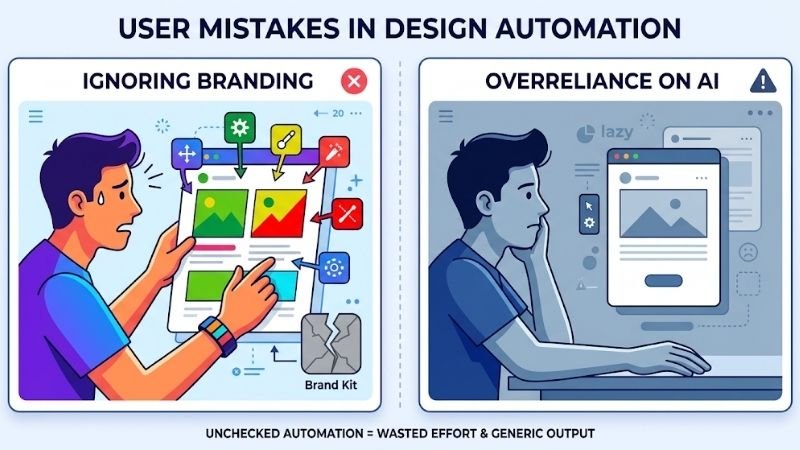
- Ignoring brand guidelines and relying solely on generic templates
- Overusing AI-generated content without personal customization
- Not updating brand kits regularly, leading to inconsistent designs
- Failing to explore all available features, missing out on valuable automation tools
- Using low-quality images or elements that reduce the overall professionalism of designs
Avoiding these mistakes ensures that it delivers maximum value and helps you produce high-quality, professional designs consistently.
The Future of Canva Helper Tools
As artificial intelligence continues to evolve, its capabilities are expected to expand significantly. Future versions may include more advanced predictive design suggestions, deeper integration with marketing analytics, voice-activated design commands, and even automated video editing features. Businesses that adopt these tools early will likely gain a competitive advantage in content creation speed and quality.
Moreover, as more companies shift towards remote work and digital marketing, the demand for efficient design solutions like this will only continue to grow. This makes it a valuable investment for anyone involved in content creation, marketing, or branding.
Frequently Asked Questions (FAQs)
1. What exactly does a Canva Helper do? It assists users by automating design tasks, suggesting templates, generating content, and improving overall efficiency within the Canva platform.
2. Is a Canva Helper free to use? Many of these tools offer free basic features, while advanced functionalities may require a premium subscription.
3. Can beginners use a Canva Helper without design experience? Yes, it is specifically designed to assist users of all skill levels, including complete beginners.
4. Does using a Canva Helper affect design quality? No, in fact, it often improves design quality by providing professional templates and AI-driven suggestions.
5. Is a Canva Helper safe to integrate with my Canva account? Most reputable options are safe, but it is always recommended to check permissions and reviews before installing any third-party extension.
6. Can a Canva Helper replace a professional graphic designer? While it is excellent for basic and intermediate design needs, complex branding projects may still require professional designer expertise.
7. Which type of users benefit most from a Canva Helper? Social media managers, small business owners, students, freelancers, and marketing teams benefit the most from using one.

Conclusion
In conclusion, a Canva Helper has become an indispensable tool for anyone looking to create professional, consistent, and visually appealing designs without spending countless hours on manual work. From automating repetitive tasks to offering AI-powered suggestions, it simplifies the entire design process for beginners and professionals alike. While it does come with a few limitations, such as dependency on internet connectivity and occasional integration issues, the overall benefits far outweigh these minor drawbacks.
Whether you are a small business owner trying to establish a strong brand identity, a social media manager juggling multiple platforms, or a student working on academic presentations, integrating one into your workflow can dramatically improve both efficiency and design quality. As technology continues to advance, we can expect even more powerful features to be added, making these tools an essential part of the modern digital design ecosystem.
If you haven’t already explored the potential of a Canva Helper, now is the perfect time to start. By combining human creativity with smart automation, you can achieve professional-level designs faster than ever before, ultimately saving time, reducing costs, and enhancing your overall brand presence in today’s competitive digital landscape.
