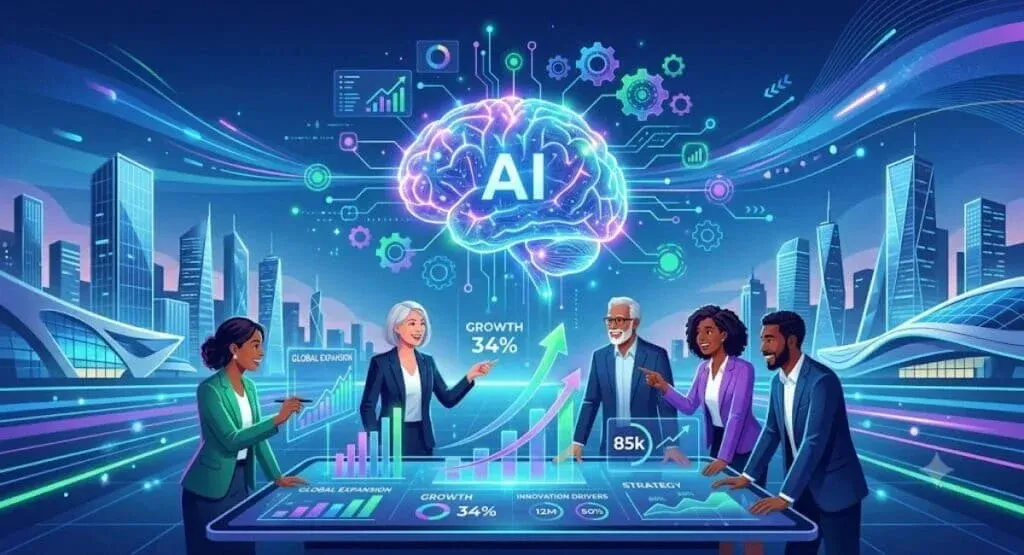
Droven.io AI in digital transformation is quickly becoming one of the most searched topics among business owners, IT professionals, and students trying to understand how artificial intelligence is reshaping the way companies operate. Digital transformation is no longer a buzzword reserved for boardroom presentations — it has become a survival strategy for businesses of every size. From small startups automating customer support to global enterprises rebuilding their entire IT infrastructure around AI, the shift is real, fast, and often overwhelming. This is exactly where knowledge platforms like Droven.io step in, helping readers make sense of AI-driven change before they invest time or money in it.
In this article, we’ll break down what Droven.io AI in digital transformation actually means, how AI is reshaping business operations, where Droven.io fits into this picture, and what companies should weigh before jumping on the AI bandwagon.
What Is Digital Transformation?
Digital transformation refers to the process of integrating digital technology into every area of a business, fundamentally changing how it operates and delivers value to customers. It’s not just about buying new software — it’s a cultural and operational shift that touches everything from workflow automation to customer experience, data analytics, and decision-making. Understanding droven.io ai in digital transformation starts with understanding this bigger picture, because AI has become the engine behind almost every modern transformation strategy.
Traditionally, digital transformation meant moving from paper to spreadsheets, then from spreadsheets to cloud computing. Today, the next phase of that journey is being driven almost entirely by artificial intelligence, machine learning, and intelligent automation.
What Is Droven.io?
Droven.io is best understood as an educational technology platform rather than a software product or SaaS tool. It doesn’t sell an AI model, a dashboard, or a subscription service. Instead, it functions as a knowledge hub that publishes plain-language explainers, guides, and industry insights on artificial intelligence, automation, cloud computing, cybersecurity, and digital transformation trends.
Rather than pushing demos or sales pitches, the platform focuses on helping readers — students, entrepreneurs, developers, and business decision-makers — understand what these technologies actually do and where they fit before committing budget to any specific tool. This editorial, vendor-neutral approach is exactly why so many people search for droven.io ai in digital transformation content when researching AI adoption strategies.
How Droven.io AI in Digital Transformation Is Reshaping Business
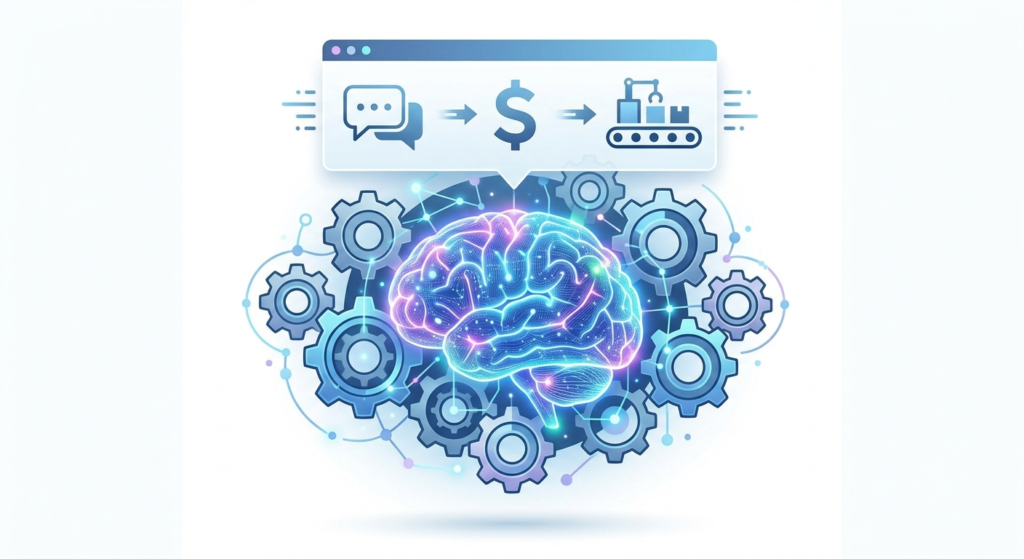
Artificial intelligence has moved from an experimental add-on to a core engine of digital transformation strategies. Here’s how the concept behind droven.io ai in digital transformation plays out across industries:
1. Workflow Automation
AI-powered automation tools — including RPA (robotic process automation), no-code platforms, and custom workflow engines — are eliminating repetitive manual tasks, freeing employees to focus on higher-value work.
2. Data-Driven Decision Making
Modern businesses generate enormous volumes of data. AI and predictive analytics help convert this raw data into actionable business intelligence, allowing leaders to make faster, evidence-based decisions instead of relying on gut instinct.
3. Customer Experience Personalization
Machine learning models analyze customer behavior in real time, enabling personalized recommendations, smarter chatbots, and more responsive service — all central pillars of a modern digital transformation strategy.
4. Smarter Cybersecurity
As digital ecosystems expand, so does exposure to risk. AI-driven threat detection systems now identify unusual patterns and potential breaches far faster than manual monitoring ever could, making security a built-in part of transformation rather than an afterthought.
5. Cloud and Infrastructure Optimization
AI helps businesses right-size cloud resources, predict infrastructure needs, and reduce operational costs — a critical benefit for companies scaling their digital operations without ballooning IT budgets.
Key AI Technologies Behind Droven.io AI in Digital Transformation

- Machine Learning (ML): Powers predictive models, recommendation engines, and pattern recognition.
- Natural Language Processing (NLP): Drives chatbots, virtual assistants, and automated content analysis.
- Robotic Process Automation (RPA): Automates rule-based, repetitive digital tasks.
- Predictive Analytics: Forecasts trends, demand, and risk using historical data.
- Computer Vision: Used in quality control, security, and retail analytics.
- Generative AI: Assists in content creation, code generation, and rapid prototyping.
These technologies rarely work in isolation — most successful digital transformation initiatives blend several of them into a single connected strategy, which is the core idea behind droven.io ai in digital transformation content.
Pros and Cons of AI-Driven Digital Transformation
Like any major technological shift, adopting AI as part of a digital transformation strategy comes with real benefits — and real trade-offs. Businesses need a clear-eyed view of both before committing resources.
Pros
- Increased Efficiency: Automating repetitive processes reduces manual workload and speeds up operations significantly.
- Better Decision-Making: Access to real-time analytics and predictive insights leads to more informed business strategies.
- Cost Savings Over Time: While initial implementation can be costly, automation typically reduces long-term operational expenses.
- Improved Customer Experience: Personalization and faster response times build stronger customer relationships.
- Scalability: AI systems can handle growing workloads without a proportional increase in staff or resources.
- Stronger Security Posture: AI-based monitoring can detect anomalies and threats faster than traditional methods.
Cons
- High Initial Investment: Implementing AI tools, training staff, and restructuring workflows requires meaningful upfront spending.
- Skill Gaps: Many organizations lack in-house AI or data science expertise, creating a steep learning curve.
- Data Quality Dependency: AI systems are only as good as the data feeding them — poor data leads to poor outcomes.
- Integration Challenges: Merging AI tools with legacy systems can be technically complex and time-consuming.
- Change Resistance: Employees may resist new AI-driven workflows, especially if they fear job displacement.
- Ethical and Privacy Concerns: Increased data usage raises legitimate questions about privacy, bias, and responsible AI governance.

Traditional Digital Transformation vs. Droven.io AI in Digital Transformation
| Aspect | Traditional Digital Transformation | AI-Driven Digital Transformation |
|---|---|---|
| Core Focus | Digitizing existing manual processes | Automating and optimizing processes intelligently |
| Decision-Making | Based on historical reports | Based on real-time predictive analytics |
| Speed of Implementation | Slower, phase-by-phase rollout | Faster iteration with AI-assisted tools |
| Customer Interaction | Standardized, one-size-fits-all | Personalized, behavior-based |
| Cybersecurity Approach | Manual monitoring and periodic audits | Continuous AI-driven threat detection |
| Scalability | Requires proportional resource increase | Scales with minimal added overhead |
| Cost Structure | Lower upfront, higher long-term labor cost | Higher upfront, lower long-term operational cost |
| Skill Requirement | General IT knowledge | Data science and AI/ML familiarity |
This comparison shows why so many businesses are gradually shifting from purely digital processes to AI-augmented ones — the long-term efficiency gains are hard to ignore, even though the transition requires careful planning.
Industries Benefiting Most from Droven.io AI in Digital Transformation
- Healthcare: AI supports diagnostics, patient data management, and predictive treatment planning.
- Finance: Fraud detection, algorithmic trading, and automated risk assessment rely heavily on machine learning.
- Retail and E-commerce: Personalized recommendations, demand forecasting, and inventory automation.
- Manufacturing: Predictive maintenance and computer-vision-based quality control.
- Education: Adaptive learning platforms and administrative automation.
- Software Development: AI-assisted coding, testing, and deployment pipelines.
Common Challenges Businesses Face During AI Adoption
Even with clear benefits, AI adoption isn’t a plug-and-play process. Many companies struggle with:
- Lack of a clear use case before investing in tools
- Poor or disorganized internal data
- Underestimating the change-management effort required
- Choosing tools based on hype rather than actual business need
- Insufficient testing before full-scale rollout
This is precisely why vendor-neutral educational resources — like the guides published on platforms such as Droven.io — have become valuable. They help decision-makers understand droven.io ai in digital transformation concepts before they’re pitched a specific product, reducing the risk of costly missteps.
Many of these challenges aren’t unique to any one industry. A retail company automating inventory forecasting and a hospital automating patient scheduling can run into the exact same problems: unclear ownership of the project, unrealistic timelines, and a mismatch between what leadership expects AI to do and what it can realistically deliver in the first year. Reading up on real-world case studies and honest breakdowns of what worked and what didn’t is often more useful than any single product demo.
Best Practices for Implementing Droven.io AI in Digital Transformation

Businesses that succeed with AI-driven change usually follow a similar pattern. Understanding droven.io ai in digital transformation best practices can help avoid the common mistakes that derail otherwise promising initiatives.
- Start with a clear business problem, not a tool. Identify the operational pain point first, then look for the right AI or automation solution — not the other way around.
- Audit your data before automating anything. Since AI systems depend heavily on data quality, cleaning and organizing internal data is often the real first step of digital transformation.
- Pilot before scaling. Running a small, controlled pilot project helps validate assumptions about droven.io ai in digital transformation before a company-wide rollout.
- Invest in training, not just technology. Employees need to understand how new AI-driven workflows change their day-to-day responsibilities.
- Keep humans in the loop. Fully automated decision-making without human oversight can introduce bias or errors that go unnoticed until real damage is done.
- Revisit strategy regularly. AI tools evolve quickly, so a digital transformation roadmap built around droven.io ai in digital transformation principles should be reviewed and updated at least once or twice a year.
Following these steps doesn’t guarantee success, but it significantly reduces the risk of costly missteps that many companies experience when adopting AI without a clear plan.
Frequently Asked Questions (FAQs)
1. Is Droven.io an AI software tool? No. Based on publicly available information, Droven.io functions as an educational content platform covering AI, automation, cybersecurity, and digital transformation — not as a proprietary AI product or SaaS tool with a login or dashboard.
2. What does droven.io ai in digital transformation actually mean? It refers to the broader concept of using artificial intelligence to modernize business operations, as explained and documented by educational platforms like Droven.io — covering automation, predictive analytics, and intelligent decision-making.
3. How is AI different from traditional digital transformation? Traditional digital transformation focuses on digitizing existing processes, while AI-driven transformation adds intelligence — enabling systems to predict, automate, and adapt rather than simply digitize.
4. Is AI adoption expensive for small businesses? Initial costs can be a barrier, but many no-code and low-code AI automation tools have made adoption more accessible for smaller companies compared to a few years ago.
5. What is the biggest risk in AI-driven digital transformation? Poor data quality and lack of a clear use case are among the most common reasons AI initiatives fail to deliver expected results.
6. Can small businesses compete with large enterprises using AI? Yes. Cloud-based AI tools and automation platforms have lowered the barrier to entry, allowing smaller businesses to access capabilities once limited to large enterprises with big IT budgets.
7. Do I need a data science team to start AI-driven transformation? Not necessarily at first. Many businesses start with off-the-shelf automation and AI tools, then build in-house expertise as their needs grow more advanced.
Conclusion
Droven.io AI in digital transformation is no longer an optional layer on top of business strategy — it has become the driving force behind how companies compete, operate, and grow. From workflow automation and predictive analytics to smarter cybersecurity and personalized customer experiences, artificial intelligence is reshaping how businesses function at every level.
Platforms like Droven.io play a useful role in this shift, not by selling a specific tool, but by helping readers understand the broader AI and automation landscape before making decisions. For any business — whether a small startup or an established enterprise — the path forward isn’t about adopting AI for the sake of it. It’s about understanding droven.io ai in digital transformation honestly, weighing the pros and cons, and building a strategy that fits real operational needs rather than chasing hype.
As AI continues to evolve, businesses that combine curiosity with careful planning will be the ones that turn digital transformation from a buzzword into a genuine competitive advantage.
