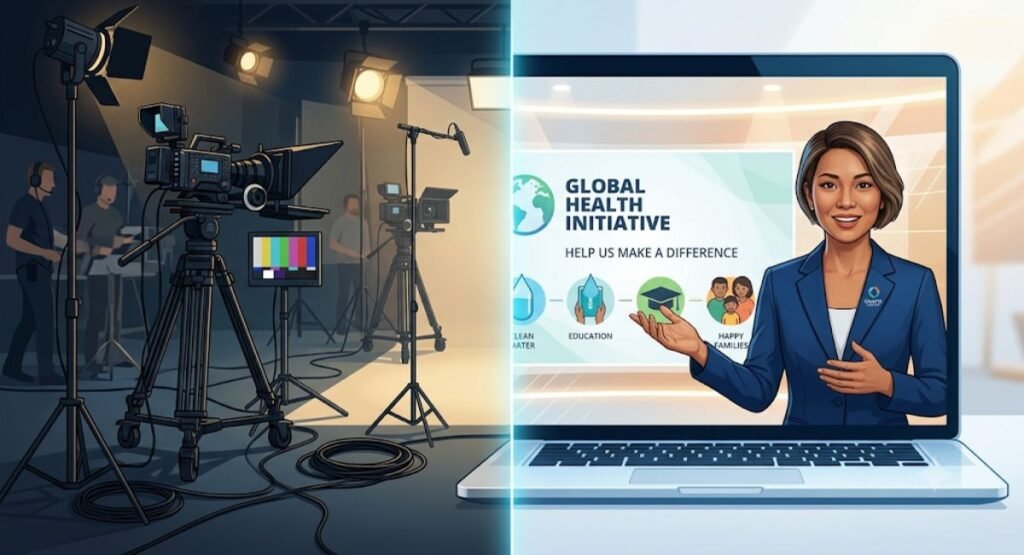
Top AI avatar tools for nonprofit fundraising videos in 2026 exist for exactly this reason: a small nonprofit’s communications coordinator once spent three weekends coordinating a videographer, voice actor, and translator just for a two-minute year-end appeal — by the time it was ready, half the giving season had passed. That’s exactly why so many charities are turning to AI avatar video platforms: software that turns a plain script into a talking, human-like presener, without a camera crew, a rented studio, or a five-figure invoice.
If you’re comparing AI avatar platforms for your nonprofit for the first time, this guide is meant to save you that kind of scramble. We’ll walk through what these tools actually do, which platforms genuinely deserve your team’s time in 2026, how they stack up side by side, where they fall short, and how to actually use them without your donor messaging feeling robotic. No fluff, no vague “AI will change everything” hype — just a practical look so you can make an informed call before committing your budget.
Why Nonprofits Are Turning to AI Avatar Videos for Fundraising
Top AI Avatar Tools for Nonprofit Fundraising Videos in 2026help charities create engaging donor outreach campaigns without the high cost of traditional video production.
Traditional video production for a single donor appeal can run into thousands of dollars once you add actors, equipment, editing, and translation costs — money most small and mid-sized nonprofits would rather put toward the mission than overhead.
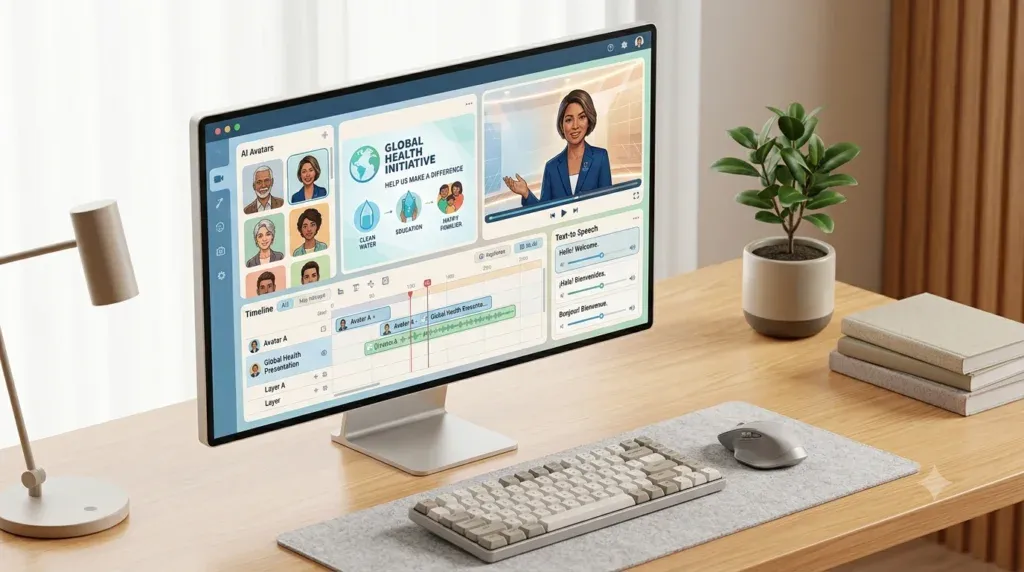
AI avatar platforms flip that equation. A staff member types a script, picks a digital presenter, and within minutes has a finished video ready for email, social media, or a donation page — a genuine game-changer for teams running multiple or multilingual campaigns.
There’s also a quieter benefit: consistency. When your executive director is busy, sick, or camera-shy, an AI avatar still delivers a clear, on-brand message — no reshoots, no waiting weeks for a filming slot.
That said, these tools work best as a complement to real footage, not a replacement for it. Authentic, consent-based beneficiary stories still carry the most emotional weight. Smart nonprofits use AI avatars for explainers, staff updates, and translated appeals, while keeping real human stories front and center for their biggest campaigns.
A Quick Real-World Example
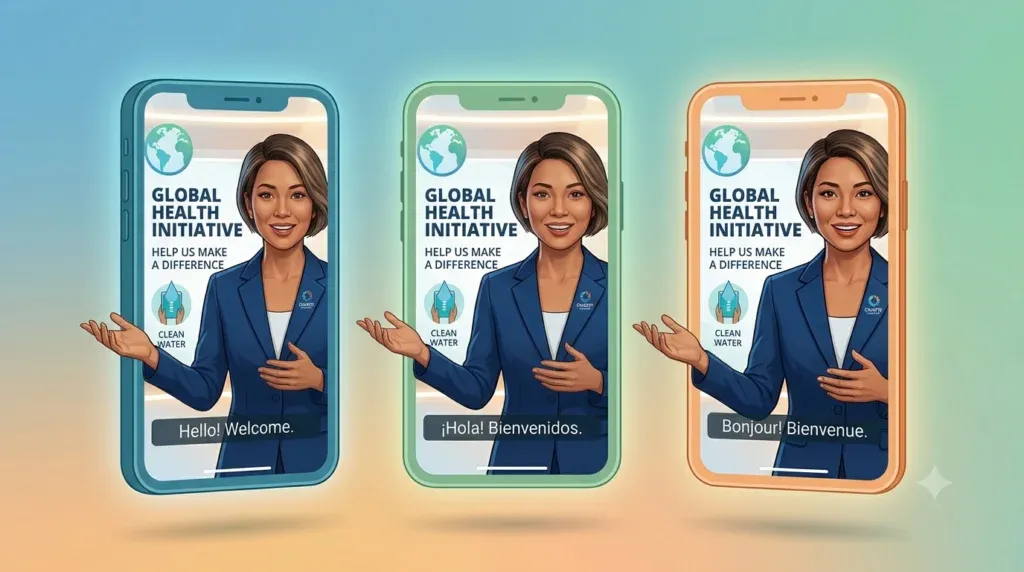
Picture a mid-sized education nonprofit running a year-end appeal across three donor segments: English-speaking, Spanish-speaking, and international. Traditionally that’s three shoots, three translators, and three editing passes — a two-week turnaround and a bill well into the thousands.
With an AI avatar tool, that same organization can write one core script, generate three language versions with the same presenter, and have all three ready within a single afternoon — exactly the workflow driving adoption across the nonprofit sector.
When evaluating the Top AI Avatar Tools for Nonprofit Fundraising Videos in 2026, nonprofits should focus on multilingual support, realistic avatars, and affordable pricing.
What to Look for Before Choosing an AI Avatar Platform for Your Nonprofit
Not every platform on the market is built with charitable organizations in mind, and a flashy demo video doesn’t always translate into something your team can actually use day to day. Before you subscribe, check for these essentials:
Realistic facial expressions and lip-sync — donors notice artificiality fast, and it erodes trust quicker than a typo.
Nonprofit or NGO discounts — many platforms offer reduced pricing once you verify charity status, so always ask first.
Multilingual voiceover support — genuinely useful if your donor base spans different countries or language communities.
Simple editing workflow — most teams don’t have a dedicated editor, so ease of use beats a long feature list you’ll never touch.
Brand and avatar consistency — the same presenter should be reusable across campaigns to build donor familiarity over time.
Vertical and short-form export options — most fundraising content is watched on mobile, so 9:16 export is a must.
Data and consent policies — worth a quick read, especially if you’re modeling avatars on real staff or beneficiaries.
Top AI Avatar Tools for Nonprofit Fundraising Videos in 2026
Here’s a closer look at the platforms nonprofits are actually using right now, based on what they’re genuinely good at rather than marketing claims.
1. Synthesia
Synthesia is widely considered the enterprise standard for AI avatar video, familiar to many comms teams already. It supports over a hundred languages and offers nonprofit discounts, making it a solid pick for an international donor base — and the interface is simple enough for day-one results.
Best for: Multilingual donor communication and large-scale campaigns.
2. HeyGen
HeyGen has a strong reputation for the most believable, emotionally resonant avatar videos on the market. It can translate one script into a dozen languages while keeping the same avatar and tone — genuinely useful for global, year-end appeals where consistency matters most.
That’s why HeyGen is often included among the Top AI Avatar Tools for Nonprofit Fundraising Videos in 2026.
Best for: High-quality emotional donor appeals.
3. Colossyan
Colossyan leans into interactive, educational content — a good fit for donor education, volunteer training, and onboarding rather than pure emotional appeals. It suits nonprofits explaining programs or walking volunteers through policies more than short-form marketing clips.
Best for: Donor education and volunteer training content.
4. InVideo AI
InVideo AI is generally the most budget-friendly option for producing a high volume of shorter videos — event promos, social clips, campaign teasers. Its template-driven approach trades some customization for speed, a fair trade for small, stretched-thin teams.
Best for: High-volume, low-cost social and event videos.
5. D-ID
D-ID is known for turning a single photo into an animated, talking avatar — useful for smaller organizations that want a personalized spokesperson without a full avatar library subscription. It’s a lighter-weight option, and the price reflects that.
Best for: Quick, low-cost personalized clips from a single image.
6. Elai.io
Elai.io offers a straightforward script-to-video workflow with a decent free tier, approachable for volunteer-run nonprofits testing AI video for the first time. It’s not the flashiest option, but for teams testing the waters, that simplicity is a feature.
Best for: Small teams testing AI avatar video on a limited budget.
Comparison Table: Leading AI Avatar Platforms for Charities
Pros & Cons section
| Tool | Starting Price (approx.) | Languages Supported | Nonprofit Discount | Best Use Case |
|---|---|---|---|---|
| Synthesia | $22–$67/mo | 140+ | Yes | Global multilingual appeals |
| HeyGen | $24–$89/mo | 40+ | Sometimes | Emotional donor appeals |
| Colossyan | $19–$70/mo | 70+ | Sometimes | Donor & volunteer education |
| InVideo AI | $20–$48/mo | 50+ | Rare | High-volume social clips |
| D-ID | $18–$59/mo | 30+ | Rare | Photo-to-video personalization |
| Elai.io | Free–$29/mo | 65+ | Rare | Small teams, low budget |
Comparing the Top AI Avatar Tools for Nonprofit Fundraising Videos in 2026 side by side helps nonprofits choose the right platform for their budget and goals.
Pricing is approximate and changes frequently — always confirm current rates directly with each provider before subscribing.
Pros and Cons of Using AI Avatar Video Platforms for Fundraising
Many of the Top AI Avatar Tools for Nonprofit Fundraising Videos in 2026 can reduce production costs while improving campaign reach.
Pros
Dramatically lower production cost compared to traditional video shoots
Fast turnaround, often minutes instead of weeks
Easy to update scripts for new campaigns without reshooting anything
Built-in multilingual voiceover for wider donor reach
No need for in-house video production staff or specialized equipment
Consistent on-brand messaging even when key staff are unavailable
Cons
Avatars can still feel slightly artificial if lighting, pacing, or emotion isn’t set carefully
Overuse may risk making donor communication feel impersonal or automated
Subscription costs add up quickly if multiple team members need seat access
Not a substitute for authentic, consent-based beneficiary storytelling
Some platforms restrict advanced features to expensive enterprise-only tiers
Requires a bit of a learning curve to get natural-sounding scripts, not just accurate ones
How Nonprofits Can Use AI Avatar Videos Effectively
A few practical, field-tested tips help these tools perform better in real fundraising campaigns rather than just looking good in a demo:
Pair AI avatars with real impact footage. Use the avatar for narration or the call-to-action, and real photos or clips for the emotional core of the story — donors respond to real faces.
Keep scripts conversational. Write the way a real staff member would actually speak out loud, not like a formal press release nobody would say in person.

Disclose AI use where appropriate. A short, honest note that a video uses a digital presenter helps preserve donor trust rather than risk feeling deceptive later.
Test short-form versions first. A 30–60 second cut for social media often outperforms a long-form appeal, especially on mobile.
Reuse the same avatar across a campaign. Consistency helps donors recognize and connect with your “spokesperson” the same way they would a familiar staff member.
Review every draft out loud before publishing. AI-generated pacing sometimes needs a manual tweak or two to sound genuinely human rather than slightly rushed.
Common Mistakes Nonprofits Make With AI Avatar Videos
A few missteps show up again and again once organizations start using these tools:
Skipping a script review. AI avatars only sound as natural as the script they’re given — a stiff, jargon-heavy script produces a stiff, jargon-heavy video.
Using AI avatars for every single piece of content. Reserve real footage for your biggest moments; AI avatars work best as a supporting tool, not the entire strategy.
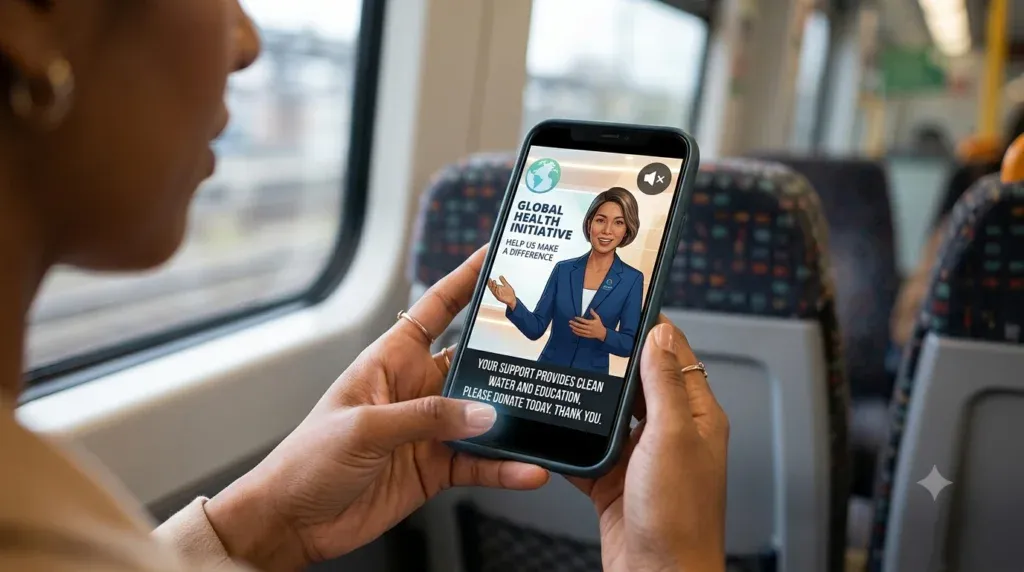
Ignoring accessibility. Always add captions, since a meaningful portion of donors watch fundraising videos with the sound off.
Forgetting to check licensing terms. Some platforms restrict commercial or fundraising use on lower-tier plans, so it’s worth reading the fine print once before a campaign goes live.
FAQs About AI Avatar Video Platforms for Charities
Q: Are AI avatar videos suitable for major donor appeals? They work well for updates and explainers, but many professionals still recommend real footage for your highest-dollar asks, where a personal touch matters more.
Q: Do any of these platforms offer free trials for nonprofits? Most offer a limited free tier or trial period, and several extend discounted pricing once you verify nonprofit status.
Q: Will donors be able to tell the video uses an AI avatar? Quality varies by platform, but higher-end tools like Synthesia and HeyGen produce noticeably more natural results than most budget options.
Q: Can these tools handle multiple languages for international donors? Yes — this is one of their strongest use cases, translating and dubbing a single script into dozens of languages without hiring separate voice talent.
Q: Which are the Top AI Avatar Tools for Nonprofit Fundraising Videos in 2026?
Q: Is it ethical to use AI avatars to represent beneficiaries? Best practice is using them for staff messaging and narration, while keeping beneficiary stories authentic and consent-based rather than AI-generated.
Q: How long does it take to produce a video with these tools? Most platforms generate a finished one-to-two-minute video in 10–20 minutes once the script is ready, plus a little time for your own review.
Q: Do I need any video editing experience to use these tools? No — most platforms are built so non-technical staff can produce a finished video without prior experience, which is a big reason nonprofits adopted them so fast.
Conclusion
After reviewing the Top AI Avatar Tools for Nonprofit Fundraising Videos in 2026, it’s clear that each platform serves different fundraising needs and campaign sizes.
Choosing the right platform ultimately comes down to your organization’s size, budget, and the story you’re trying to tell. Synthesia and HeyGen suit larger nonprofits chasing polish and multilingual reach; Colossyan fits donor education; InVideo AI and Elai.io suit smaller teams testing the waters.
The Top AI Avatar Tools for Nonprofit Fundraising Videos in 2026 include Synthesia, HeyGen, Colossyan, InVideo AI, D-ID, and Elai.io, each offering unique benefits for charities and nonprofit organizations.
Used thoughtfully, alongside real human stories, these platforms help nonprofits stretch limited budgets, reach donors in more languages, and ship campaigns faster than traditional production ever allowed. The goal isn’t to replace your team’s voice — it’s to give that voice a faster way to reach the people who care.
LSI/related keywords used throughout: AI video generator, nonprofit video marketing, donor engagement videos, text-to-video AI, virtual presenter, synthetic media for charities, AI voiceover, digital storytelling, fundraising campaign videos, AI-generated spokesperson, charity marketing tools.
